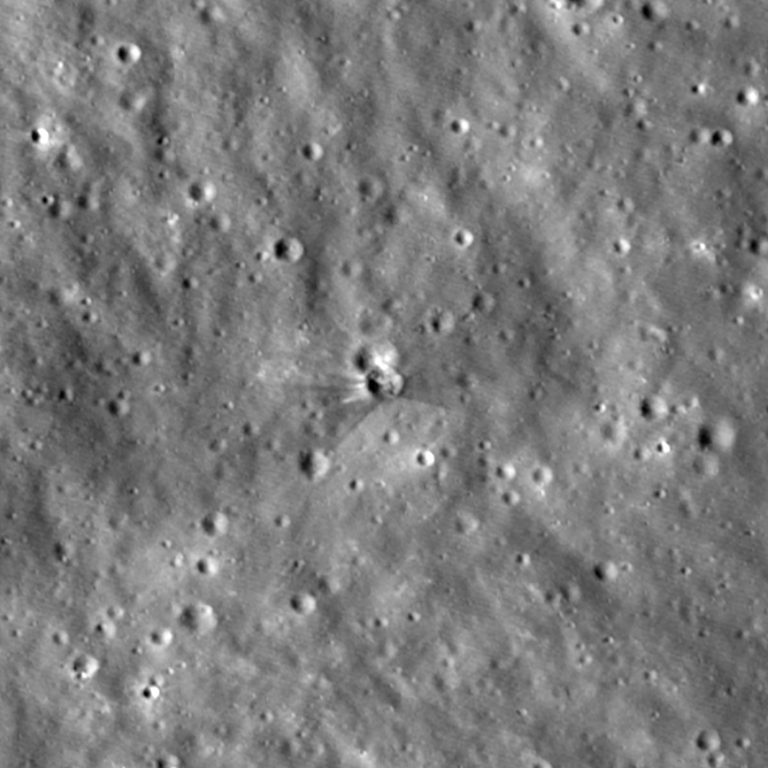
NASA announced Tuesday that its Lunar Reconnaissance Orbiter (LRO) has returned clear, narrow‑angle photos of a new crater on the Moon’s surface. The 60‑foot‑wide depression was formed when the upper stage of a SpaceX Falcon 9 rocket, launched on Jan. 15, 2025, unintentionally collided with the Moon on Aug. 5.
How the impact was detected
Shortly after the impact, the European Southern Observatory’s Very Large Telescope in Chile reported a bright flash and a fresh mark on the lunar surface. South Korea’s Danuri lunar orbiter then transmitted images to the public via social media, confirming the location of the strike.
NASA’s coordinated imaging effort
Working with the Korea Aerospace Administration, NASA used Danuri’s preliminary data to steer LRO’s high‑resolution camera toward the impact site. Engineers tilted the spacecraft so its cameras faced the crater each time LRO passed roughly 60 miles above the Moon, traveling about one mile per second. Because LRO circles the Moon every two hours, it took six days for the orbiter’s ground track to line up with the new crater, and additional time to process the data.
The agency emphasized the precision required: a delay of just ten seconds could have caused the image to miss the crater entirely, as the Moon’s rotation would shift the target by up to ten miles.
Why the collision happened
After completing its primary mission of delivering two commercial lunar landers, SpaceX intentionally discarded the rocket’s upper stage in low lunar orbit. Orbital dynamics eventually altered the stage’s trajectory, sending it on a collision course with the Moon.
NASA lunar scientist Kelsey Young explained that the event was “technically accepted and safe” as a method of disposing of hardware in low lunar orbit. The Moon is constantly struck by meteoroids, asteroids and other debris, so the impact posed no danger to Earth or to existing lunar installations.
Scientific value of the crash
Researchers are now studying the fresh crater to learn more about the Moon’s surface composition and mechanical properties. The impact provides a real‑world test case for how future missions might protect astronauts and infrastructure from similar events.
Data from the LRO images, combined with observations from the VLT and Danuri, will help refine models of lunar regolith behavior and inform the design of shielding for upcoming crewed missions.
Looking ahead
The incident underscores the growing number of private‑sector activities in cislunar space and the need for clear guidelines on end‑of‑life disposal of spacecraft. While the collision was unplanned, NASA and international partners view it as an opportunity to gather valuable scientific data without compromising safety.
Original reporting: KRDO (Colorado Springs metro) — read the source article.