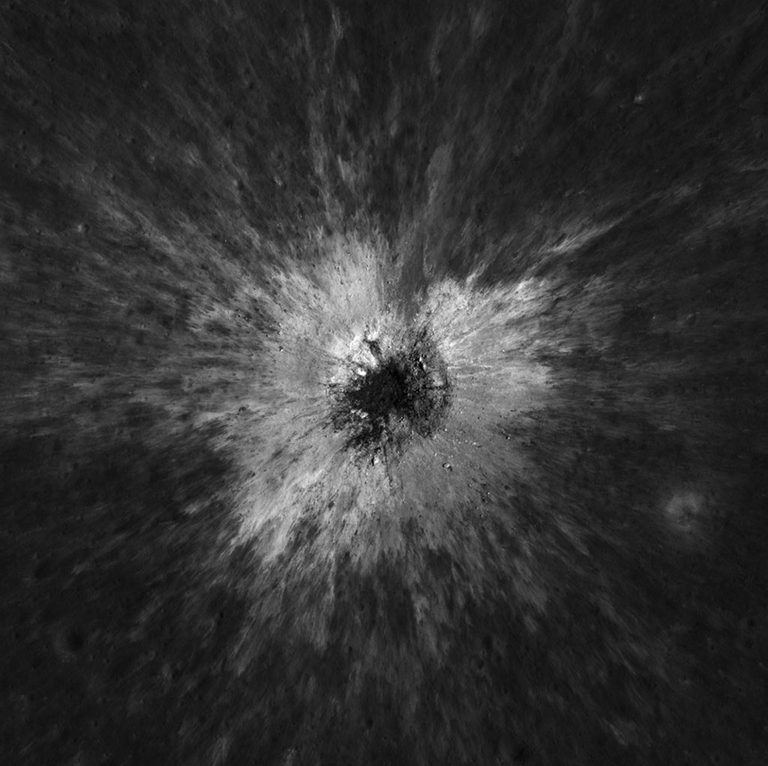
In a striking development for space enthusiasts across the nation, NASA announced Wednesday, Sept. 16, that a new impact crater on the Moon has been identified as the largest ever observed in the solar system. The discovery was made by Robert Wagner, a scientist with NASA’s Lunar Reconnaissance Orbiter (LRO) program, during a routine data‑quality review.
How the crater was found
Wagner noticed an unusual dark spot while comparing before‑and‑after images of the Moon’s eastern limb. “I just stopped, dropped everything, and started looking into what that spot was,” he recalled. Further analysis confirmed the feature as a fresh impact crater, officially named McGetchin in honor of pioneering lunar scientist Tom McGetchin.
Size and significance
The crater measures roughly 141 feet (about 43 meters) deep and stretches the width of three football fields. NASA estimates the impactor – an asteroid or comet – was comparable in size to a three‑ to six‑story building. Such an event is described as a “less than once‑in‑a‑century impact,” meaning a similar magnitude collision on the Moon occurs roughly once every hundred years or even less frequently.
Scientists say the impact likely occurred between April 11 and May 22, 2024, based on the timing of the images that first captured the new formation. The fresh crater provides a rare, real‑time laboratory for researchers to study impact dynamics, crater morphology, and the Moon’s surface response to high‑velocity collisions.
Scientific value
High‑resolution observations of the McGetchin crater are already yielding valuable data. Researchers can examine the ejecta pattern, the shape of the rim, and the way surrounding terrain was altered. “It was by far the most obvious impact debris pattern I’ve ever seen in one of these images,” Wagner noted.
The findings have been submitted for publication in the peer‑review journal Science Advances, where the team expects to detail the estimated size, velocity, and kinetic energy of the impactor. Such information helps refine models of lunar surface evolution and improves our understanding of impact hazards throughout the solar system.
What this means for future missions
While the crater itself poses no immediate threat to Earth, studying these natural experiments enhances NASA’s ability to predict and mitigate potential asteroid impacts on our own planet. The data also support future lunar exploration initiatives, offering insight into safe landing sites and the stability of the lunar regolith for upcoming missions.
NASA’s continued monitoring of the Moon underscores the agency’s commitment to advancing scientific knowledge and protecting our planetary neighborhood. As more high‑definition imagery becomes available, scientists anticipate additional discoveries that will further illuminate the dynamic history of Earth’s nearest celestial neighbor.
Original reporting: KTBS 3 (Shreveport) — read the source article.