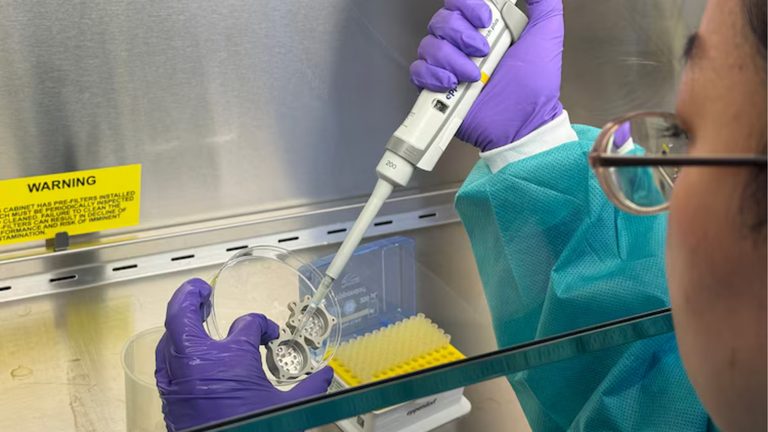
In a collaborative effort that underscores America’s leadership in scientific innovation, researchers from the Icahn School of Medicine at Mount Sinai, NASA and aerospace firm Space Tango have sent a suite of miniature organs to the International Space Station (ISS). The payload, launched aboard the commercial resupply mission CRS-35 from Cape Canaveral Space Force Station on Tuesday, is expected to arrive at the ISS on Thursday.
Why mini organs matter
Microgravity and heightened radiation in space accelerate physiological changes that mimic years of aging on Earth. “Six months in space … is equivalent to about 10 to 20 years of aging on Earth,” said Kevin Costa, associate professor of surgery at Mount Sinai. By exposing tiny, fully automated organ models—ranging from hearts the size of a shoebox to brain clusters no larger than a peppercorn—to this environment, scientists can observe disease processes and test treatments in a compressed timeframe.
What the experiments will test
The team is sending up to 16 miniature hearts to monitor electrical signaling and structural responses in near‑zero gravity. Earlier, Mount Sinai’s Cardiovascular Research Institute demonstrated that individual heart cells could survive the weightless conditions of the ISS in 2023. In addition, the payload includes “miBrain” models that represent both healthy and diseased brain tissue. Researchers hope to see how these mini‑brains react to radiation and microgravity, providing clues about neurodegenerative diseases such as Parkinson’s and Alzheimer’s.
Technology behind the mini labs
The organ models are housed in a compact laboratory called CubeLab, developed by Space Tango. “It is slightly bigger than a shoebox, and it is a fully automated, miniaturized system,” explained Gentry Barnett, chief technology officer at Space Tango. The system maintains a controlled environment that mimics the natural conditions of the human body while allowing real‑time data collection.
Broader implications for health care
Although the models are not full‑sized human organs, the researchers emphasize their cost‑effectiveness and suitability for the limited space aboard the station. Findings from the ISS experiments are expected to translate directly to medical research on Earth, potentially accelerating the development of therapies for age‑related illnesses.
“The research is translating to stuff in space, but it’s also translating back to the research we do in the laboratory to help people with Parkinson’s and Alzheimer’s disease,” said Joel Blanchard, associate professor of stem cell biology and regenerative medicine at Mount Sinai.
NASA’s vision for future biology in space
Lisa Carnell, director of the biological and physical sciences division at NASA, described the experiments as a stepping stone for deeper exploration. “We sent Apollo astronauts out there over 50 years ago, but the techniques and the way that we can actually do assessments to understand what’s happening has come a long way since then,” she said. NASA plans to return humans to the Moon’s surface in 2028, build a permanent lunar base within the next decade, and eventually send crews to Mars.
By taking biology to space, the agency and its partners hope to uncover changes that cannot be observed on the ground, providing a clearer picture of how long‑duration spaceflight impacts human health and how those insights can improve the lives of people back home.
Original reporting: Brookhaven News – ABC7 New York — read the source article.