Myrtle Beach shade ideas should start with the way people use the yard during peak heat, not with the largest structure that can fit on the property. A patio that feels comfortable at 8 a.m. can feel exposed by lunch, and a pool deck that looks open in spring may need targeted shade once summer use becomes part of the daily routine.
Layered Shade Plan
The strongest plan is layered: cover the highest-use zones first, add side protection where glare cuts across the space, and choose materials that can be maintained through coastal heat, wind, salt air, pollen, and sudden storms.
Track the sun across one full weekend day before buying a sail, awning, umbrella, or pergola cover. Mark where people actually sit at breakfast, lunch, mid-afternoon, and early evening, because the right shade location often shifts away from the center of the patio.
Shade Options
Start with the areas that affect daily comfort. Shade the dining table or grill-prep surface so meals do not depend on waiting until sunset. Cover the poolside chairs where people supervise kids, read, or dry off between swims. Pay attention to south- and west-facing doors, where indoor heat and outdoor glare often meet.
Overhead cover solves midday exposure, but it may not fix low-angle sun from the west. If late-afternoon glare is the real problem, side curtains, exterior roller shades, or a strategically placed screen may work better than a bigger overhead canopy.
For fixed patios, poolside seating, or outdoor dining zones that get strong afternoon sun, sun shade sails can create useful overhead coverage without making the space feel fully enclosed. They work best when the shaded area stays in the same place every day and the home has secure anchor points.
Maintenance and Placement
Choose the shape by the area you need to cover. A triangle can shade a corner, narrow side yard, or single seating group. A rectangle usually works better over dining tables, long patios, and grill-prep zones. Two smaller sails can be easier to tension and position than one oversized sail, especially when the patio has an irregular shape.
The decision depends on anchor points. A shade sail needs secure attachment locations, enough hardware room for tensioning, and a slight slope so rain does not pool in the fabric. If the only available anchor points are light trim, weak fencing, movable planters, or unknown roof framing, use a freestanding umbrella or consult an installer before creating a large wind load.
Plan for removal during severe weather. Myrtle Beach homeowners should treat fabric shade as outdoor equipment, not a permanent roof, unless the product and installation are specifically rated for that exposure.
Umbrellas and Side Shade
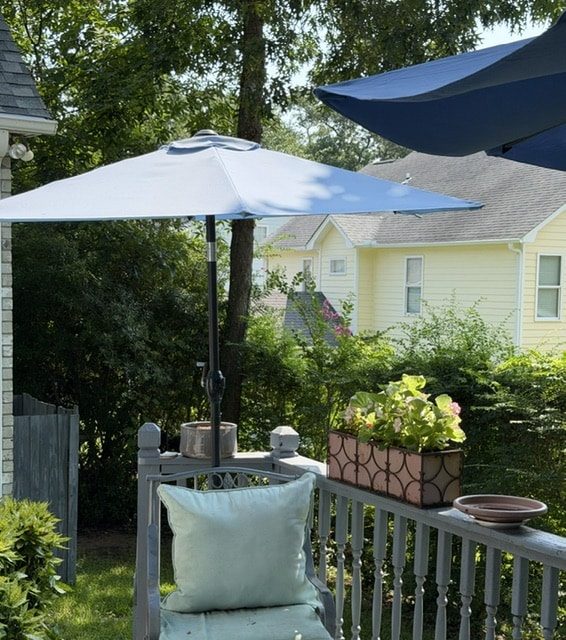
Umbrellas are still the simplest choice when seating moves during the day. A market umbrella works for a dining table with a center hole, while an offset umbrella can shade lounge chairs without putting a pole in the middle of the seating area.
The limitation is stability. A lightweight base can become frustrating in coastal wind, and a large canopy may need to be closed whenever the patio is unattended. Choose an umbrella when you want fast coverage, easy storage, and flexible placement. Choose a sail or awning when the shaded area stays in the same location every day.
Side shade matters when the sun cuts across a porch, screened room, or covered patio after mid-afternoon. Overhead structures cannot block that angle, so the solution needs to drop vertically or sit along the exposed side.
Exterior roller shades can fit covered patios and screened porches because they lower only when glare, heat, or privacy becomes a problem. Cable-guided and track-guided systems may be worth considering in wind-prone openings, but the right choice depends on exposure, opening size, and how often it will be operated.
Planting and Surface
Planting can reduce exposure over time, especially near patios, walkways, and west-facing edges. Before planting, consider roots, irrigation needs, salt exposure, mature size, and cleanup. Fast visual coverage is tempting, but the wrong plant near a patio can create leaf drop, staining, roots near hardscape, or constant trimming.
Use a two-track plan for hot summers. Install flexible shade where relief is needed this season, then plant or build for the areas expected to stay in use for years. That keeps the yard comfortable now without rushing into a permanent structure in the wrong place.
Shade works harder when the surface and furniture support it. A dark concrete pad, black metal chair, or dense outdoor rug can hold heat even after the sun moves, while lighter surfaces and breathable furniture are often easier to use in hot weather.
Move seating out of reflected heat where possible. White walls, glass doors, pool decks, and pale pavers can bounce glare into a shaded area, so the cool-looking spot may still feel bright and uncomfortable. Angle chairs toward the view but away from the strongest reflection.
Add airflow before adding more fabric. Fans under a covered porch, open furniture spacing, and uncluttered walkways can make a zone feel less trapped. If a sail, curtain, or screen blocks every breeze, it may reduce sun but make the space feel heavy.
Keep maintenance realistic. Light-colored fabric can look crisp, but pollen, salt residue, mildew, and storm debris show faster on outdoor surfaces. Choose pieces that can be rinsed, removed, tightened, or stored without turning every weekend into a cleaning project.
Original reporting: MyrtleBeachSC News — read the source article.