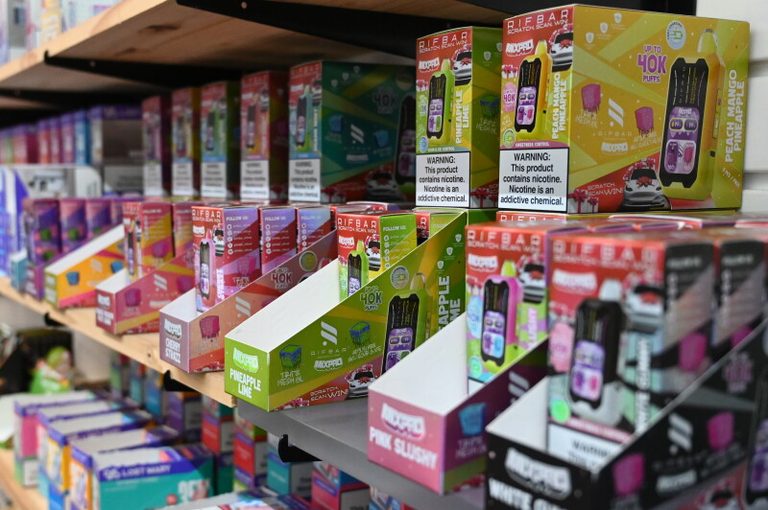
MOORHEAD, Minn. — Since Moorhead’s flavored tobacco ban took effect on Jan. 1, 2022, vaping among high school students in Clay County has dropped dramatically. The 2025 Minnesota State Survey shows use fell from 24% to just 8% over the five‑year period, a decline public‑health officials attribute to the ordinance and accompanying education efforts.
Local officials credit the ban
Jason McCoy, tobacco‑prevention coordinator for Clay County Public Health, highlighted the data as evidence that the community’s protective measures are working. “What we led with in Moorhead was the idea that Moorhead needs to protect Moorhead’s kids,” he said. McCoy added that the ban, together with other local ordinances and school‑based education, has helped drive the sharp decrease.
Broader regional movement
Other Minnesota jurisdictions are following Moorhead’s lead. The Polk County Commission voted on Nov. 3 to update its decades‑old tobacco ordinance, adding a flavored‑tobacco ban that will take effect Jan. 1. Ten counties and more than two dozen cities across the state now restrict flavored tobacco and nicotine products, covering over 30% of Minnesota’s population.
Industry pushback
Industry groups argue that bans push smokers to purchase products elsewhere. Zach Johnson, owner of Sports Vape in Fargo, warned that a ban in Fargo and West Fargo could force smoke shops to close and reduce local tax revenue. The Minnesota Wholesale Marketers Association also noted that many online retailers fail to verify age, creating a potential source of under‑age access.
“Anyone of any age can go on these sites and purchase electronic cigarettes because these sites are not checking age,” said Thomas Briant, the association’s executive director. He reported that only five of 14 surveyed websites required age verification, and just two required a signature upon delivery.
Data on online purchases
McCoy countered the claim that teens would simply move online, citing the state survey that found less than 10% of students reported buying vapes online. “If you think of 10% of 8%, that’s incredibly low,” he said. “Most kids aren’t going online.”
National trends support local findings
The U.S. Food and Drug Administration’s National Youth Tobacco Survey shows high‑school use of any tobacco or nicotine product dropped from 11% in 2022 to 7.2% in 2025, with e‑cigarette use falling from 9% to 5.2% in the same period. Similar declines have been recorded in states without bans, such as North Dakota, where vaping among high‑schoolers fell from 22% in 2015 to under 15% in 2025.
Public‑health perspective
Pat McKone, senior director of public policy and advocacy for the American Lung Association in Minnesota and North Dakota, said making addictive products harder to obtain supports youth health. “When you make it harder to get or more expensive to get, that helps support the desire to be off of these addictive products,” she explained.
McKone also noted that most teens obtain vapes from friends, family, or local shops rather than online, reinforcing the importance of community‑level restrictions.
Next steps
Clay County officials see the ban as part of a broader strategy that includes indoor vaping prohibitions and continued education. McCoy emphasized that flavors are a primary draw for youth, saying, “Flavors draw a person in long enough for the nicotine to create the addiction. Then the tobacco company has them.”
Polk County’s updated ordinance will also set the minimum purchase age at 21, aligning local law with state and federal standards. “Certainly our health policy shouldn’t live in the past while the industry continues to operate in the future,” said Polk County Public Health Director Sarah Reese.
Original reporting: InForum (Fargo section) — read the source article.