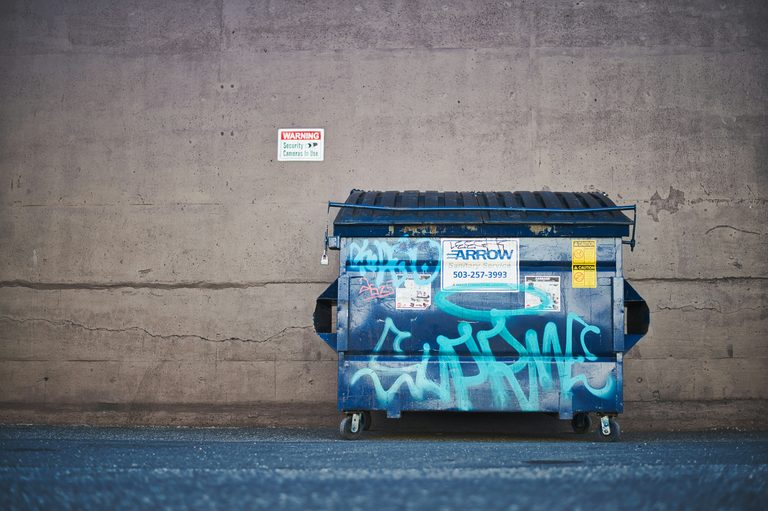
While Montana has no blanket state law banning dumpster diving, several of the state’s largest cities have enacted specific rules that can turn a simple search for discarded goods into a criminal offense. Residents and visitors in Billings, Bozeman, Great Falls and Missoula should understand the local ordinances before reaching into a commercial dumpster.
Statewide Overview
Montana Code Annotated 45-6-203 defines criminal trespass as entering or remaining on private property without permission. Because most dumpsters sit on privately owned land—whether behind a retail store, an apartment complex or a business—state trespassing law applies everywhere in the Treasure State. The law does not automatically make a dumpster a public resource.
Billings: Explicit Prohibition
Billings’ City Code Section 21‑212 makes it a misdemeanor to disturb refuse receptacles without authorization. The ordinance treats any unauthorized access to a dumpster as a violation, subject to fines and possible arrest. Billings residents are advised to leave dumpsters alone unless they have written permission from the property owner or manager.
Bozeman: Property Rights and the Gray Area
Bozeman does not have a specific ordinance labeling dumpster diving illegal, but the city’s general property‑rights and trespassing statutes still apply. If a dumpster is fenced, locked, or marked with a “no trespassing” sign, those indicators constitute a clear legal boundary. Police can charge a trespassing violation if a property owner reports the intrusion.
Great Falls: Fines and Potential Jail Time
Great Falls’ Municipal Code 8.8.190 expressly prohibits dumpster diving. Violators face monetary penalties and, in some cases, jail time. The city’s enforcement mechanisms are designed to deter what officials view as a misuse of private waste containers.
Missoula: No Specific Ban, but Trespassing Still Applies
Missoula lacks a city ordinance that directly bans dumpster diving, yet the state trespassing law remains enforceable. Any dumpster located on private property still requires the owner’s consent. In addition, officials warn of health hazards such as sharp objects, chemicals and biological material that can be present in commercial waste.
How to Dive Legally and Safely
- Contact the city or county office before approaching a dumpster to confirm whether local rules prohibit access.
- Observe all signs, fences and locks. If a property owner asks you to leave, comply immediately.
- Consider alternative ways to reduce waste, such as donating usable items to local food banks, nonprofit groups or Buy Nothing networks.
- Be aware of health risks. Wear gloves and avoid handling broken glass, chemicals or any material that could be hazardous.
Community Impact
Montana residents value stewardship of the environment and the principle of not wasting usable goods. Understanding the legal landscape helps protect both individuals from legal trouble and property owners from unwanted intrusion. A quick phone call can save a fine, an arrest record, and an uncomfortable encounter with law enforcement.
For the most up‑to‑date information, call your city’s code enforcement or police non‑emergency line. By respecting private property and local ordinances, Montanans can continue to promote responsible waste reduction while staying within the bounds of the law.
Original reporting: NewsTalk KGVO 1290 (Townsquare) — read the source article.