What do you do in a beer town built almost entirely around IPAs and pale ales? If you’re Erik Version, you open a Belgian brewery and bet that at least some people in Bend are curious about what else a glass can hold.
Monkless Belgian Ales sits on the east side of Bend, off Reed Market Road in a low-key industrial pocket that sees more locals than tourists. The taproom is warm without trying too hard — wood tables, a long bar, good light. It doesn’t feel like a tourist stop, which is probably why it isn’t one. The regulars here tend to know what they’re ordering before they walk in.
The beers are built around Belgian traditions: tripels, dubbels, witbiers, golden strongs. Monkless brews them with real discipline. The Tripel, which shows up on the menu as a rotating staple, runs around 9% ABV and tastes closer to ripe fruit and honey than the booze-forward punch you might expect at that strength. The Dubbel has the kind of dark, dried-fruit depth — raisins, fig, a little clove — that makes you want to drink it slowly. These are not session beers, and the taproom doesn’t pretend otherwise.
What sets Monkless apart in a market full of hop-forward brewing is restraint. The yeast does most of the talking. The house yeast strains are Belgian-sourced, and you can actually taste them — that specific fruity, slightly spicy character that defines the style and that most American breweries treat as optional. Here it’s the whole point.
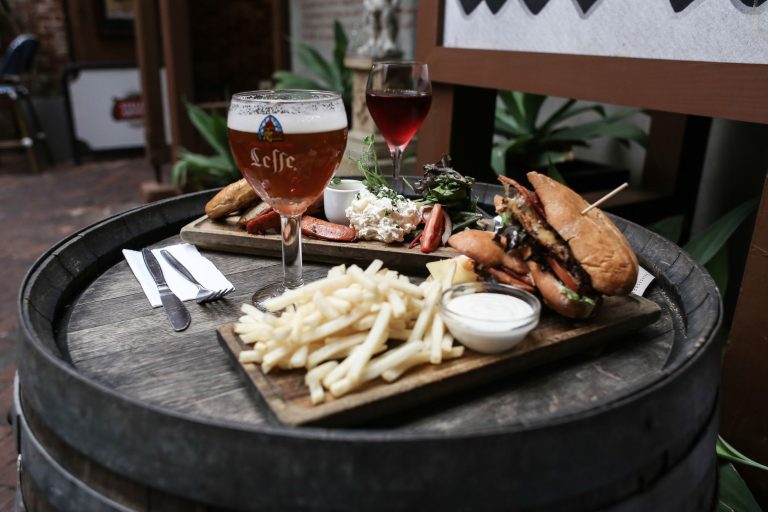
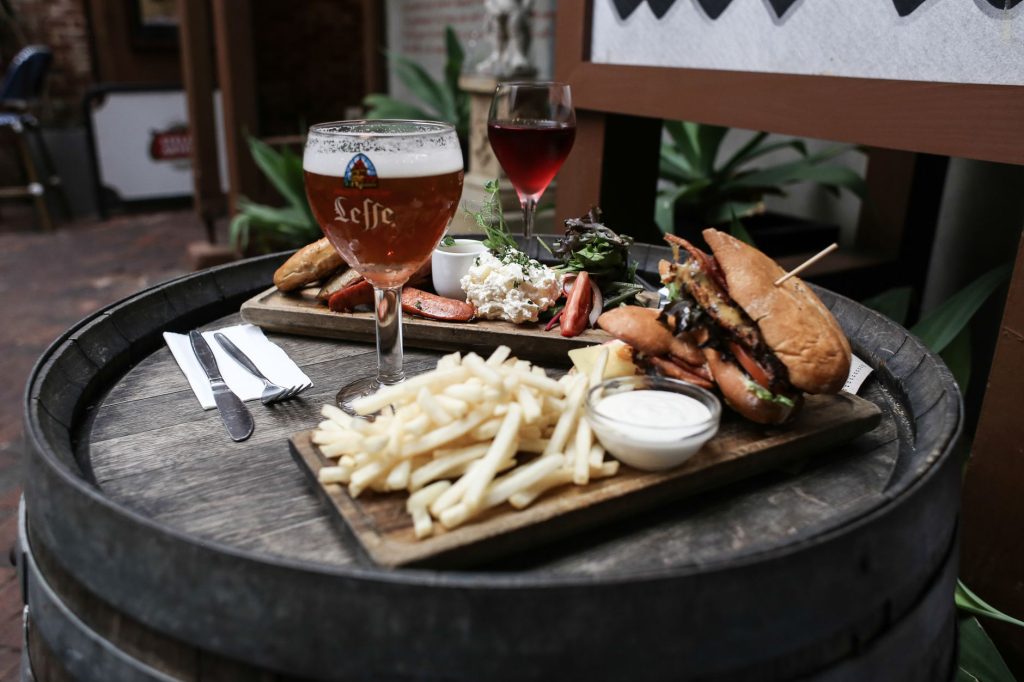
They also serve food, which matters more than it might sound. The menu leans Belgian-ish comfort: moules frites on certain nights, a solid charcuterie board, pretzels with mustard. Nothing elaborate, but it’s the kind of bar food that makes sense next to a Witbier at 6 p.m. The mussels, when they’re on, are worth ordering — steamed in one of the house beers, served with enough crusty bread to handle the broth.
Pints run roughly $6–$8 depending on the pour, and the stronger beers sometimes come in smaller tulip glasses, which is correct. A flight of four is a reasonable way to work through the range if you’re unfamiliar with the styles. The staff can usually tell you what’s fermenting, what’s seasonal, and what pairs with what — the kind of working knowledge that comes from actually caring about the product.
The taproom gets busy on weekend evenings but rarely feels crowded. Weekday afternoons are quieter. If you’re coming from downtown, it’s about a ten-minute drive east — no view, no waterfront, no tourist infrastructure. That’s not a complaint. It means the place earns its crowd on the beer alone.
Bend has no shortage of places to drink. Monkless is specific about what it does and why, which makes it one of the more interesting stops in a city where you can walk into a good taproom almost anywhere. If you’ve had one too many IPAs this week, this is the obvious antidote.