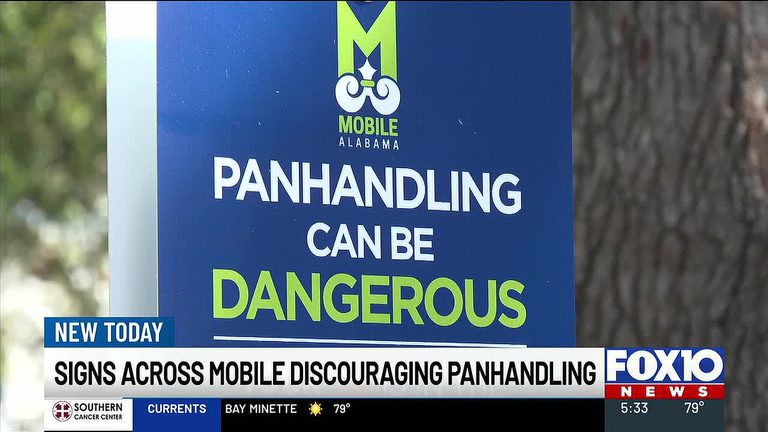
Mobile, Ala. – City officials are rolling out a new public‑awareness campaign aimed at directing charitable giving toward established nonprofits that serve people experiencing homelessness. Signs featuring QR codes that link to the United Way of Southwest Alabama’s donation page have begun appearing at high‑traffic locations, starting with Bienville Square.
Why the city is changing the conversation
Kendall Young, a representative of the City of Mobile, explained that the goal is to connect donors with resources that can provide lasting support. “We know that giving money is not always the best way to do it, because tomorrow they will need help,” Young said. “As we do outreach in the city, we want to provide them with help that will sustain them in the situation they are in.”
How the program works
Each sign displays a QR code that, when scanned, takes the user to a secure online donation portal for United Way of Southwest Alabama. The nonprofit promises to allocate funds toward housing, shelter, identification services and other programs designed to promote long‑term stability for the roughly 500 individuals the city estimates are experiencing homelessness.
Community response
The initiative has sparked a range of reactions. Some residents, like Glen Higdon, support the approach, noting that direct cash handouts can sometimes enable a cycle of short‑term relief without addressing underlying needs. “I don’t give to them because I feel like it could be just enabling,” Higdon said after scanning a QR code and contributing $10 to United Way. “If that’s the best answer, then it’s an answer. It’s maybe not the right answer, but hopefully it’s the best answer.”
Other locals, such as a resident identified only as Delaney, question whether the city should discourage personal generosity. “We don’t really know what they’re using it for, but you can’t tell people not to give money to the homeless,” Delaney argued. “If people are willing, why can’t they accept it?”
City’s stance
Officials stress that the campaign is not intended to limit compassion but to channel it through organizations that can track needs and deliver services efficiently. By leveraging technology, the city hopes to make charitable giving both convenient and impactful, reducing the risk of inadvertent harm while strengthening the social safety net for the most vulnerable residents.
Looking ahead
Additional signs are slated for installation at other downtown locations and neighborhood hubs in the coming weeks. City leaders anticipate that the QR‑code system will increase overall contributions to nonprofits, thereby expanding the pool of resources available for housing assistance, job training and other critical services.
As Mobile continues to address homelessness, the partnership between municipal officials and community charities underscores a broader commitment to stewardship, personal responsibility and the dignity of every individual.
Original reporting: FOX10 WALA Mobile (news) — read the source article.