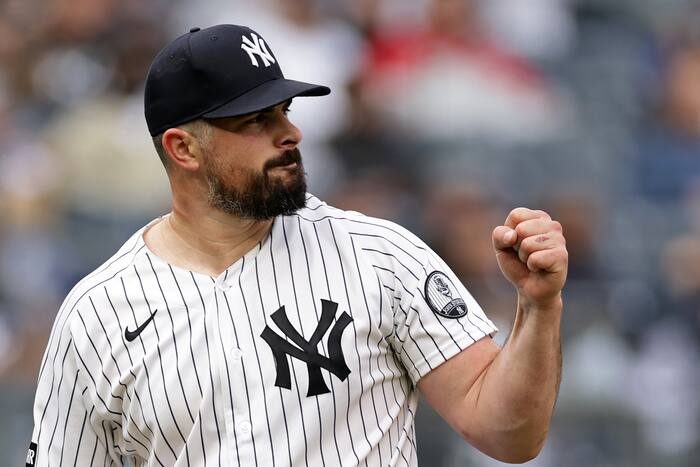
As the five‑year labor contract that governs Major League Baseball expires on Dec. 1, the sport faces the prospect of a lockout that could halt trades, free‑agent signings and even delay spring training. Players, led by Yankees pitcher Carlos Rodón, are openly stating they will not play under the owners’ proposed salary‑cap structure.
Players’ concerns about the cap
“We won’t play. I’m going to be frank with you,” Rodón told reporters. “I’m not worried about it. They should be worried about it. There’s a lot of money on us playing baseball. That’s why they pay us a lot.”
The proposed cap would limit team payrolls to $245.3 million for the 2026 season, with a payroll floor of $171.2 million for 2027 that could dip to $154.1 million before being restored over two years. The New York Mets, for example, posted an opening‑day payroll of more than $352 million in 2026, well above the suggested ceiling.
Historical context and owners’ rationale
MLB officials argue the cap is needed to address economic disparity among clubs. Glen Caplin, a league spokesperson, said the cap “levels the playing field, allowing us greater flexibility to address longstanding player priorities while sharing baseball revenue with the players 50/50.” Owners also claim a cap would give them financial certainty and could boost franchise values.
Critics point out that the last time MLB imposed a cap‑related work stoppage, a 7½‑month strike in 1994‑95 led to the first World Series cancellation in 90 years. Since then, no regular‑season games have been lost to a work stoppage, though the sport has endured ten work stoppages overall.
Players push back
Union head Bruce Meyer highlighted that low‑payroll teams have performed well this season. “Despite MLB claiming they need a salary cap because small‑market teams supposedly have no hope, we see Milwaukee with the best record in baseball for the second straight year and Tampa with the best record in the AL,” Meyer said, noting Milwaukee ranks 30th out of 30 in market‑size rankings.
Players also warned that the cap would dramatically reduce individual earnings. First baseman Pete Alonso said, “For me the biggest thing is doing right for the generations forward because the generations before me, for the decades before, they’ve fought for our rights today.” He estimated he would lose $165,775 per regular‑season day missed, while Rodón would forfeit $144,385 daily. Even star outfielder Shohei Ohtani would give up $374,331 per day under a lockout.
Details of the proposed agreement
The plan would also set service‑time limits on contracts: players yet to debut could sign for up to $500 million over 12 years, while free‑agent‑eligible players would be capped at $265 million over six years. Mega‑deals such as Juan Soto’s 15‑year, $765 million contract with the Mets would be prohibited.
Revenue sharing would remain a 50‑50 split, but the union argues the definition of “revenue” and the escrow provision could dramatically cut player earnings. The proposal also includes a reduction of free‑agent eligibility from six years of service to five and the elimination of qualifying offers, changes the union says would merely shift money among players rather than increase overall spending.
Union leadership changes
In February, longtime union president Tony Clark was replaced by Meyer, who had served as deputy and chief negotiator. Players such as pitcher Chris Bassitt note a cultural shift within the association, emphasizing better communication and representation for all 30 clubs.
When the 2022 agreement was reached, the executive subcommittee voted unanimously against it, while the team player representatives approved it 26‑4, underscoring ongoing divisions within the players’ ranks.
Potential impact on fans
If a lockout occurs, the loss of regular‑season games would have a sizable economic impact on local economies that depend on game‑day revenue. While the sport has never lost a regular‑season game to a work stoppage, the financial stakes for both owners and players are high.
As the deadline approaches, both sides appear entrenched. Players are prepared to stand firm on their earnings and the ability to compete without a restrictive cap, while owners maintain that a cap is essential for the long‑term health of the league.
Original reporting: KSAT Sports (San Antonio) — read the source article.