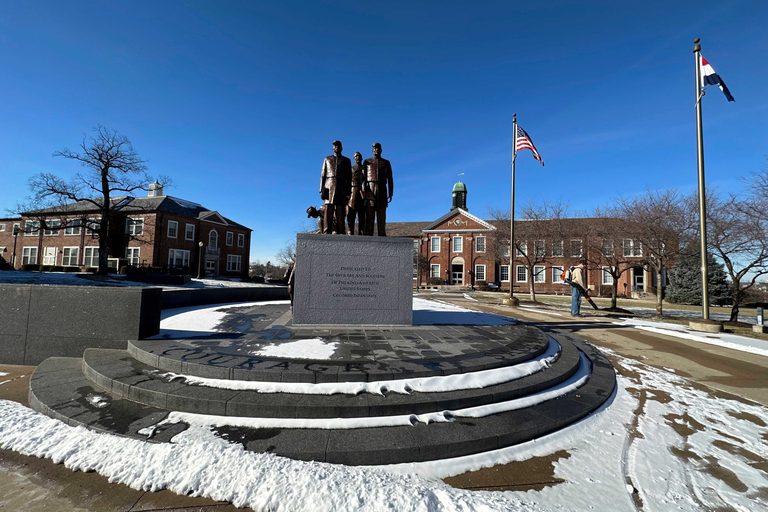
Lincoln University in Jefferson City, Missouri, has become the first target of a new legal effort aimed at correcting decades of underfunding at historically Black colleges and universities (HBCUs) that were created under the 1890 amendment to the Morrill Act. Plaintiffs, including alumni Jeanneth Johnson and Herbert Kitchen, allege the state has deliberately withheld funds that the federal government earmarked for the university.
Background on the 1890 land‑grant system
The original Morrill Act of 1862 granted public lands to states to fund colleges focused on agriculture, engineering and other practical fields. In 1890, the law was revised to require states either to open their existing land‑grant institutions to students of all races or to establish separate land‑grant schools for Black students. Missouri responded by creating the Lincoln Institute, which later became Lincoln University, to satisfy the federal requirement.
Allegations of state underfunding
According to the lawsuit, Lincoln University was underfunded by $361 million from 1987 through 2020, a shortfall documented in federal data. The plaintiffs argue that while the federal government provided parity funding, the state chose not to match those appropriations, leaving the campus with deferred maintenance, inadequate heating and hot water, and declining enrollment.
Lincoln’s enrollment has dropped from roughly 3,400 students in 2011 to about 2,200 today, a stark contrast to the University of Missouri’s Columbia campus, which enrolls roughly 32,000 students. The plaintiffs contend that the funding disparity devalues the degrees earned by Lincoln graduates and hampers the university’s ability to serve its community.
National context and the 1890 Project
The lawsuit is the first action taken by the 1890 Project, a coalition of more than a dozen states’ attorneys general and private advocates seeking equitable funding for the 18 land‑grant HBCUs established under the 1890 amendment. The group plans to negotiate or litigate in multiple jurisdictions over the next year, with Missouri identified as the initial focus.
Federal analysis released in 2023 under the Biden administration found that only two states—Delaware and Ohio—had funded their traditional and HBCU land‑grant institutions equitably. The report highlighted a nationwide shortfall of $12.6 billion in HBCU funding over the past three decades.
Voices from the plaintiffs
“It is very unfortunate that we still live in a climate where, depending on the color of one’s skin, one gets precedence over the other,” said Jeanneth Johnson, a 54‑year‑old Lincoln graduate from Sterling Heights, Michigan, who is a plaintiff in the case.
Herbert Kitchen, another plaintiff whose great‑great‑grandfather helped fund the school’s founding, recalled living in a residence hall without heat or hot water in the 1980s. “I am the hope and dream that my great‑grandfather had when he was a slave,” Kitchen said, emphasizing the personal stakes involved.
Response from state officials
The University of Missouri system and the governor’s office issued statements indicating they could not comment on pending litigation. No official response from the state legislature has been reported.
Legal strategy and next steps
Don Calloway, a former Missouri state lawmaker who leads the 1890 Project, clarified that the goal is not equal funding but funding on a parity basis that reflects the federal appropriation. “The problem is that the state made an intentional choice not to match the federal appropriation,” he said.
Calloway indicated that the coalition is also reaching out to attorneys general in Virginia, Arkansas, Maryland, North Carolina, Alabama and Georgia, where similar lawsuits have been filed in the past, including a $577 million settlement in Maryland.
Implications for Missouri families
If successful, the lawsuit could restore billions of dollars to Lincoln University, improving facilities, restoring student services, and strengthening the institution’s role in the community. For families who rely on a quality, affordable education for their children, equitable funding aligns with the constitutional principle of equal protection and supports the traditional family’s pursuit of upward mobility.
The case underscores a broader national conversation about how state governments allocate resources to historically Black institutions and the importance of honoring the original intent of the 1890 land‑grant legislation.
Original reporting: WPBF (Treasure Coast / Hearst) — read the source article.