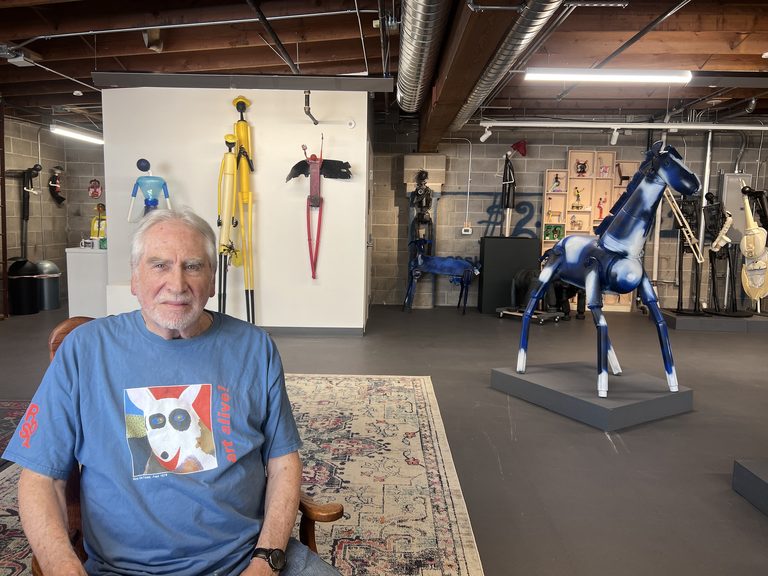
San Francisco — In the heart of the Mission District, the second‑floor studio of the Nelson Duni Gallery on Bartlett Street has become a quiet laboratory of reclaimed art. Jerry Barrish, an 87‑year‑old former bail bondsman and filmmaker, spends his days sorting red and blue plastic, combs and baubles, then shaping them into figures that tell personal stories.
A Lifetime of Reinvention
Barrish first turned plastic into art in 1988, gathering washed‑up debris from the beach outside his Pacifica home. The resulting Christmas‑tree sculpture launched a career that has spanned four decades. “I haven’t seen anyone doing what I’m doing,” he says. “I have found a unique voice.”
His studio now welcomes visitors who wander past the neon sign of his former bail‑bond business, which still hangs outside the gallery. Inside, customers at a nearby café, cello players, women in jaunty hats, and even a few penguins and parrots share the space with his handcrafted figures, including a series of menorahs.
Artistic Process and Materials
Each piece begins with a simple act of collection. Barrish spends one day a week walking the shoreline or the streets of the Mission, gathering single‑use plastic that would otherwise become waste. He then sorts the material by color and texture, storing it in labeled bins. “I find plastic as precious as metal or stone,” he explains. “My work is just how it affects you, how it touches you.”
While the plastic of today is flimsier than the bulkier items he used in the 1980s, his method remains consistent. Some sculptures take a single day; others evolve over ten years. Recent works explore themes of love, loss, and healing, such as the 2018 piece “Do You Still Love Me?” which depicts a woman revealing her post‑mastectomy chest to a partner.
Recognition and New Opportunities
After more than 40 years of creating, Barrish secured his first New York representation at age 85. The new partnership has already attracted a younger audience and increased the market value of his pieces. “I’ve been doing the same work for 40 years or more,” he says with a laugh. “Then I get New York representation and suddenly people see me differently. I find that hysterical.”
Despite the attention, Barrish remains grounded. He likens his routine to a monk’s discipline: four days in the studio, one day collecting plastic, and one day devoted to watching the 49ers. He says he would be content to spend his final years in the studio, surrounded by the figures that have become his lifelong companions.
From Bail Bonds to Narrative Art
Before his artistic career, Barrish spent 52 years in the bail‑bond business, freeing individuals involved in the Bay Area’s radical movements of the 1960s and ’70s, including Vietnam‑war protesters, members of the Black Panthers, and participants in the Berkeley Free Speech movement. He credits that exposure to diverse lives with sharpening his observational skills, which later informed both his filmmaking and his visual art.
Using the GI Bill, he studied film at the San Francisco Art Institute, producing three feature films and earning a DAAD residency in Berlin. A 2018 documentary, “Plastic Man,” highlighted his journey and emphasized how his dyslexia fostered outside‑the‑box thinking and deep empathy.
Looking Ahead
Even with newfound acclaim, Barrish says his creative mission remains unchanged: to tell stories through reclaimed material. “If you’re an artist, part of your job is showing up,” he notes. “No one loves my work more than I do.”
Original reporting: Mission Local — read the source article.