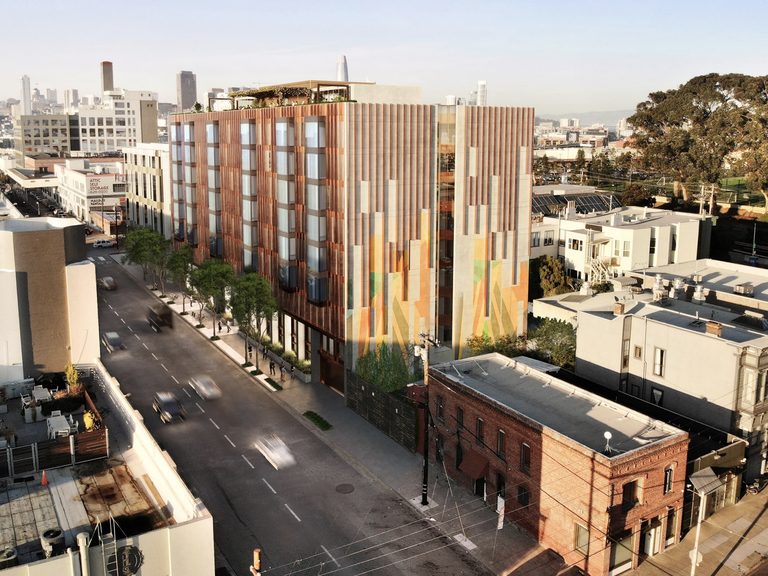
San Francisco – The long‑delayed market‑rate housing project at 321 Florida Street in the Mission District is finally slated to break ground next month after developers secured a $61.7 million loan from PNC Bank. The nine‑story building will contain 152 units, of which 15 are designated as affordable for families earning between 30 % and 120 % of the area median income.
Original community commitments
When the planning commission approved the project in 2021, the developer, DM Development, signed memorandums of understanding (MOUs) with several local nonprofits. Those agreements pledged:
- $2 million to help purchase the parking lot at 2675 Folsom St., a site once eyed for a fully affordable housing complex by Mission Housing.
- A 1,500‑square‑foot ground‑floor space to be donated to the Community Arts Stabilization Trust for a gallery.
- A new wall and $25,000 to improve the outdoor play area of Sweet Peas preschool, located next to the project.
- $25,000 for Friends of Franklin Square and a subsidy of up to $2,000 per year for three years to support park clean‑ups.
All of those MOUs expired in 2023.
Changes to the plan
Since the original approval, the city’s inclusionary housing rate has been lowered. The 2021 proposal called for 168 units, including 23 affordable units (about 14 %). The revised plan now offers 152 units with just 15 affordable units – under 10 % of the total.
Developer Mark MacDonald of DM Development attributes the shift to rising interest rates that began in 2022 and the need to make the project financially viable. He says the company is still working with community partners to determine the best way to support the neighborhood.
Current status of community benefits
DM Development has offered a revised benefit package. Instead of the $2 million originally promised for the Folsom St. purchase, the developer now proposes a $500,000 seed grant to the arts nonprofit Cultura y Arte Nativa de las Americas, plus a matching fundraiser that could raise an additional $500,000.
The developer also says it will continue to work with Sweet Peas preschool on playground improvements and is adding the names of 100 Mission District residents to an interest list for a separate project at 300 De Haro St. (the list is open to any applicant).
Sweet Peas director Samantha Dionne confirmed that a DM Development employee contacted her six months ago about honoring the playground commitment. The preschool has since received an email stating that a call will be scheduled once construction timelines are finalized.
Community Arts Stabilization Trust communications director Catherine Nguyen noted that the organization has not spoken with the developers since 2022.
Friends of Franklin Square member Jolene Yee reported that the group’s bi‑annual park clean‑up continues, with DM Development sponsoring the last 12 events. Yee said the developer recently emailed that renewing the MOU is “on their radar.”
Financing and timeline
After a period of stalled financing, DM Development and Denver‑based equity firm Ancestris closed a $61.7 million loan with PNC Bank, allowing construction to move forward. The project is expected to be completed in late 2028.
MacDonald emphasized that securing market‑rate housing in today’s environment is a notable achievement, noting that many similar developments have stalled despite clear demand. He expressed hope that the project will restore confidence for future developments in the Mission District.
Community response
Long‑time Mission organizer Roberto Hernandez, CEO of the arts nonprofit Cultura y Arte Nativa de las Americas, said the developer “worked with us” and described the developer as “a nice guy.” However, Hernandez and other local groups have voiced concern that the original promises have been diluted and that the expired MOUs leave the neighborhood without the full set of benefits originally promised.
Mission Local reached out to Hernandez and United to Save the Mission for comment on the revised benefit package but has not received a response.
Overall, the project illustrates the shifting balance of power in the Mission District, where developers now have greater leeway than community groups that once wielded strong opposition to market‑rate housing.
Original reporting: Mission Local — read the source article.