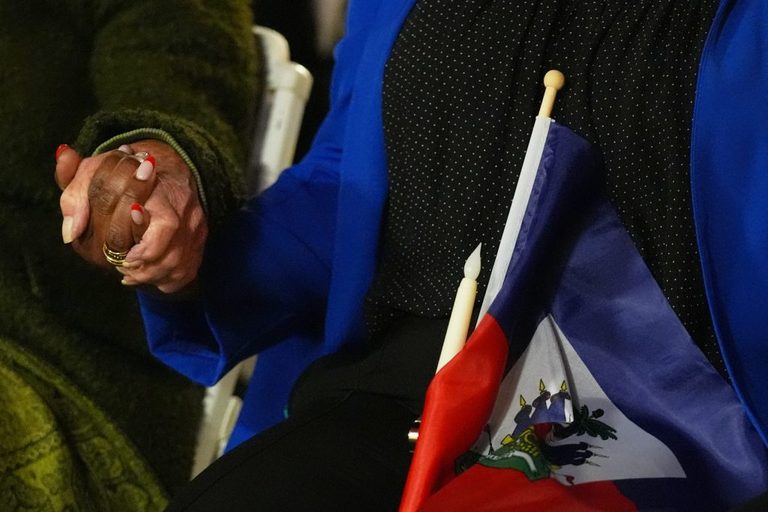
Members of Minnesota’s Haitian community are facing anxiety and uncertainty after the Supreme Court ruled to end Temporary Protected Status (TPS) for Haitians and Syrians. The ruling, which was made on June 25, will end TPS for Haitians and Syrians by the end of July, although no final date has been set.
Local Impact
An estimated 4,000 Haitians live in Minnesota, although it is unclear how many are in the state under TPS. Rose Mingo-Holtz, a Haitian immigrant who runs a French immersion preschool in Minnetonka, said that the community is stressed and concerned for their safety. Many have been working on getting their paperwork processed, she said.
The Supreme Court’s decision has also sparked concerns about the potential for deportation. Djenane Saint Juste and her mother Florencia Pierre, who ran a popular cultural dance group called Afoutayi, have already made the difficult decision to leave the United States. They had TPS since the 2010 earthquake that rocked the Haitian capital of Port-au-Prince but opted to leave the country, fearing deportation.
Broader Implications
The Trump administration has moved to end TPS for 13 of 17 countries that had protections at the start of 2025. Those terminations have been met with lawsuits that argue the Department of Homeland Security (DHS) hasn’t followed the process established by Congress to properly evaluate conditions in those nations before ending TPS.
The Supreme Court ruling limits both Congressional rule setting and judicial review of that process, according to Ana Pottratz Acosta, an immigration lawyer and professor at the Mitchell Hamline School of Law. This decision may have significant implications for the future of TPS and the ability of immigrants to remain in the United States.
Original reporting: Sahan Journal — read the source article.