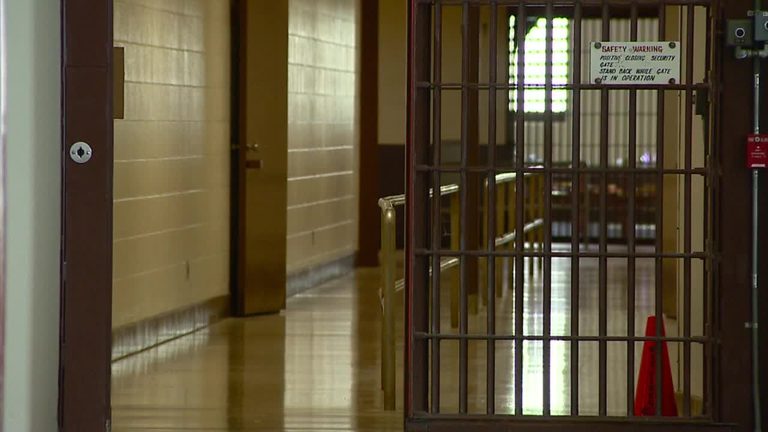
Milwaukee County Judge David Borowski handed down three consecutive life sentences without the possibility of release to Thomas Seville Zollicoffer, who was convicted of murdering his ex‑girlfriend, Vanessa DeHerrera, her friend Scott Bucholz, and later killing Shamarla Hare. In delivering the sentence, Judge Borowski used the moment to caution Wisconsin’s governor against employing the state’s commutation authority in cases involving violent offenders.
Judge’s warning to current and future governors
“This case should never, never, never be looked at 30 or 40 years down the road to have someone say, ‘Well, you know, Mr. Zollicoffer said he promised he’d be good now, and he’s been in jail for 30 years, so, okay,’” Judge Borowski said. “Because that’s what happened in Wisconsin last week. None of them were my cases. But I disagree with that policy because those individuals weren’t there. He wasn’t there to sit through the days or weeks of grief caused by people like Mr. Zollicoffer.”
The judge’s remarks came after Governor Tony Evers, a Democrat, exercised his constitutional power to grant 14 commutations last week – the first such use in decades. Ten of those commutations involved prisoners convicted of homicide. While a commutation does not automatically release a prisoner, it can shorten a sentence, reduce parole time, or make an inmate eligible for parole sooner.
Victims’ families and community advocates weigh in
Shannon Ross, founder and CEO of The Community, an organization that prepares inmates for re‑entry, acknowledged the judge’s frustration but cautioned against a blanket dismissal of the commutation process. “The judge’s thoughts were very much valid, in that they express a frustration that a lot of victims and a lot of system actors who played a part in putting away somebody that caused harm to the community,” Ross said. “Where it kind of goes off the rails, unfortunately, is there’s a view that everything is supposed to be frozen in time at that moment years, decades ago and that people cannot grow.”
Ross added that many of the individuals considered for commutation were teenagers at the time of their offenses, noting the scientific consensus that youthful brains differ in decision‑making capacity. “It doesn’t really equate to what is happening now,” she said, distinguishing those cases from the 37‑year‑old Zollicoffer.
Governor’s commutation advisory board
This year Governor Evers established a commutation advisory board that solicited input from prisoners, victims’ families, and other stakeholders before making recommendations. The board’s recommendations formed the basis for the recent commutations, a process that the judge argued should not be applied to the most egregious violent crimes.
Judge Borowski’s broader concerns
Beyond the commutation debate, Judge Borowski also criticized Milwaukee County for allowing inmates, including Zollicoffer, to use tablet devices while incarcerated, suggesting that such privileges could undermine the seriousness of their sentences.
Evers’ press office did not respond to a request for comment on the judge’s statements.
Implications for Wisconsin’s criminal‑justice policy
The exchange highlights a growing tension in Wisconsin between efforts to reform the criminal‑justice system and the desire to uphold the rights and safety of victims and their families. While the governor’s office argues that commutations can aid rehabilitation and reduce prison costs, judges like Borowski stress the need for accountability and the preservation of public trust in the legal system.
As the state continues to navigate these competing priorities, the conversation sparked by Judge Borowski’s sentencing is likely to influence future discussions about the appropriate scope of executive clemency in Wisconsin.
Original reporting: FOX6 WITI – local news — read the source article.