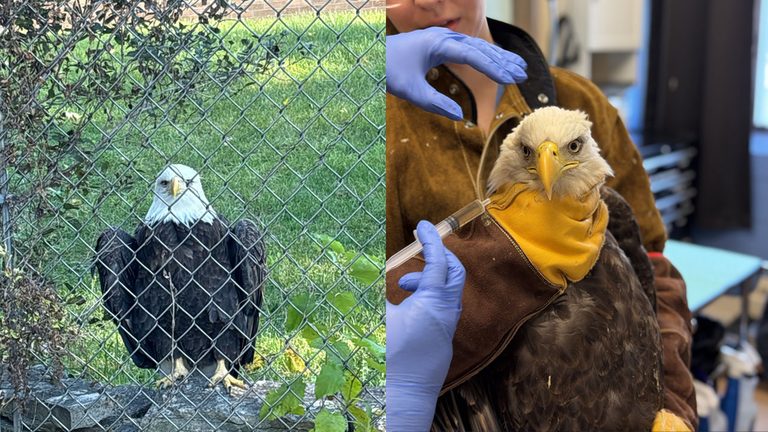
A Milwaukee resident discovered a bald eagle hopping through a neighbor’s yard after a World Series watch party last week. The bird remained on the ground the next day, prompting the homeowner to call the Wisconsin Humane Society (WHS) Wildlife Rehabilitation Center.
Rescue and Diagnosis
Two licensed rehabilitators from WHS safely captured the eagle and transported it to their facility for a medical exam. Laboratory tests showed alarmingly high lead levels—so high that the equipment could not register a reading, indicating life‑threatening poisoning.
Radiographs revealed two to three tiny metallic fragments lodged in the eagle’s stomach. While the exact source of the metal could not be identified, WHS staff noted that fishing tackle and ammunition are common culprits that raptors inadvertently ingest.
Care Efforts and Early Signs of Improvement
“We’re especially grateful to the team from the University of Wisconsin School of Veterinary Medicine program who came to evaluate and provide care for the eagle,” said Alyssa Baumann, a wildlife rehabilitator at WHS. “It’s far too early to tell how he’ll do, and his prognosis is heavily guarded, but we’re doing all we can in hopes of a recovery.”
Despite the grim outlook, WHS staff have observed encouraging signs in recent days. The eagle’s breathing has stabilized, he is slowly regaining strength and alertness, and he has begun eating solid food.
Why Lead Poisoning Is a Growing Concern
Lead is a potent toxin for birds of prey. Even microscopic amounts dissolve quickly in the highly acidic digestive system of an eagle, entering the bloodstream and causing organ damage, anemia, and neurological impairment. Wildlife experts warn that lead from spent ammunition and discarded fishing gear continues to threaten raptor populations across the United States.
Conservation groups urge hunters and anglers to use non‑lead alternatives and to properly dispose of any metal debris to protect wildlife. The Wisconsin Department of Natural Resources recommends checking local regulations and adopting best practices for lead‑free hunting and fishing.
How the Community Can Help
Residents who encounter injured wildlife are encouraged to contact a licensed rehabilitator rather than attempting to handle the animal themselves. The WHS Wildlife Rehabilitation Center can be reached at (555) 123‑4567 for emergency assistance.
Support for the center comes from volunteers, local donors, and partnerships with the University of Wisconsin’s veterinary program. Community contributions help fund the specialized equipment and veterinary care needed to treat critically ill birds like this eagle.
Looking Ahead
The eagle will remain under close observation at the WHS facility. Staff will continue to administer chelation therapy and supportive care while monitoring his recovery progress. Updates will be provided as the situation evolves.
For more information on wildlife rehabilitation efforts in Wisconsin, visit the Wisconsin Humane Society’s website or follow their social media channels.
Original reporting: FOX6 WITI – local news — read the source article.