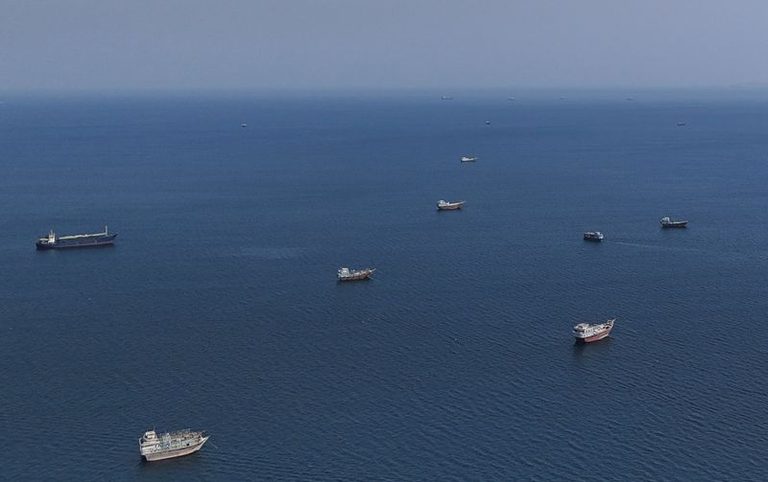
Shipping data released on Monday indicates that crude oil exports from the Middle East have risen above pre‑war levels on four of the seven days in the final week of September. The surge comes despite a spate of attacks on vessels transiting the strategically vital Strait of Hormuz.
Export volumes rebound
Kpler, a ship‑tracking and market‑intelligence firm, reported that crude shipments exceeded pre‑war volumes on September 24 and again between September 27 and 29, reaching between 19.5 million and 22.5 million barrels per day (bpd). The 7‑day moving average for crude exports stood at 18.5 million bpd on October 1.
For context, average daily exports between March 2025 and February 2026 were about 18 million bpd, before the United States‑Israel war with Iran began in late February. The overall flow of crude, refined products, chemicals and non‑gas liquids averaged 22.4 million bpd in the seven days ending September 30, according to the same Kpler data.
Increased LNG traffic
Liquefied natural gas (LNG) cargoes exiting the Strait of Hormuz also rose in September, hitting the highest monthly level since February. The figures exclude vessels that may have turned off their Automatic Identification System transponders to avoid detection.
Continued security threats
Maritime security analysts reported at least seven separate incidents involving tanker attacks in and around the Strait of Hormuz during the same period. The very large crude carrier Kazimah III was struck by an unknown projectile on October 1, igniting a fire on board. All crew members were safely evacuated, according to the intelligence firm Marisks.
Marisks also noted that the United Kingdom Maritime Trade Operations agency has logged at least one attack per day in the Strait of Hormuz or the Gulf of Aden since October 2. The firm warned that merchant vessels face a “heightened and increasingly unpredictable kinetic threat” as traffic volumes climb sharply.
While the firm stopped short of labeling the incidents as targeted attacks on specific ships, it suggested that Iranian forces may be launching missiles into a pre‑designated engagement zone, or “kill box,” where any radar signature could be engaged. Physical presence within that zone at the time of an attack could itself constitute the primary exposure.
Implications for global markets
Despite the security concerns, the rebound in export volumes underscores the resilience of global oil supply chains. The Strait of Hormuz, which typically handles about 125 large commercial vessels per day—including tankers, gas carriers, bulkers and container ships—accounts for roughly 20 % of the world’s daily crude oil and LNG supply.
Analysts note that sustained attacks could eventually disrupt these flows, potentially tightening global oil markets and influencing prices. However, the current data suggest that, for now, the market is absorbing the heightened risk without a significant drop in supply.
Looking ahead
Stakeholders will be watching closely for any escalation in maritime threats and for how regional actors respond. Continued monitoring of ship‑tracking data and intelligence reports will be essential to gauge whether the recent uptick in attacks translates into longer‑term supply constraints.
Original reporting: Appleton, WI News Feed (HLL/CB) — read the source article.