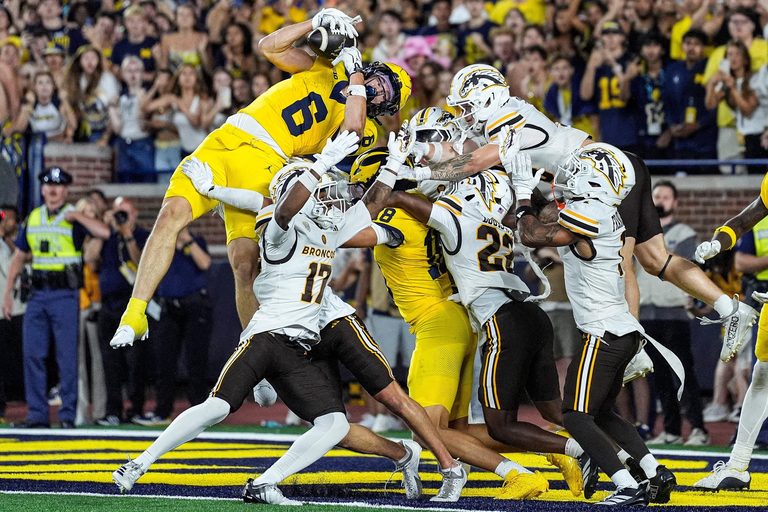
In a move that underscores the growing legal battles in college football, the Mid‑American Conference (MAC) announced Monday that it has filed a formal appeal with the NCAA FBS Oversight Committee and the College Football Playoff regarding the controversial ending of the Western Michigan vs. Michigan game.
Appeal details
Commissioner Dr. Jon Steinbrecher wrote that a review of the game’s final moments revealed a clear violation of established replay protocol. The protocol requires officials to rely on the game clock displayed on the program feed when determining whether time remains on the clock. Instead, the Big Ten replay crew used a separate clock embedded within its replay system, which was not synchronized with the program‑feed clock.
According to the MAC’s letter, the program‑feed clock showed that time had expired, while the replay‑system clock indicated one second remaining. The replay crew restored that second, allowing Michigan one additional play, which resulted in a Hail‑Mary touchdown and a 13‑12 win.
What the MAC wants
The conference is asking the Oversight Committee to recognize Western Michigan as the “actual winner” of the game, with a final score of 12‑7. The MAC also seeks to have the result reflected in NCAA records, rankings, postseason considerations, and any other appropriate NCAA purposes.
Reactions from Western Michigan
Western Michigan President Russ Kavalhuna and head coach Lance Taylor initially appeared to accept the outcome, noting that they saw no unfairness in the process. Kavalhuna, a former federal prosecutor, said, “I don’t discern anything unfair or untoward in this process.” He added that the university would use the experience to strengthen its community and encourage unity.
On Tuesday, President Kavalhuna shifted tone, describing the MAC’s appeal as “important.” He warned that some might view the university’s response as weak, but emphasized that supporting student‑athletes during adversity is a sign of strength, not bitterness.
Historical context and odds of success
Changing the outcome of a completed game is an extraordinary step. Dr. Steinbrecher acknowledged that the Oversight Committee “does not ordinarily alter results recorded on the field,” but argued that the specific replay error directly affected the final score.
While the appeal highlights the increasing legal scrutiny of college athletics, it also raises questions about consistency in replay procedures across conferences. The Big Ten’s reliance on a non‑standard clock contrasts with the MAC’s insistence on strict adherence to the program‑feed clock, a discrepancy that could prompt broader reviews of replay protocols nationwide.
What’s next?
The NCAA FBS Oversight Committee has not yet set a hearing date. If the committee sides with the MAC, the official record could be changed, affecting postseason eligibility and rankings for both programs. Regardless of the outcome, the case illustrates how procedural details can have championship‑changing consequences in modern college football.
Original reporting: All Sports Feed (HLL/CB) — read the source article.