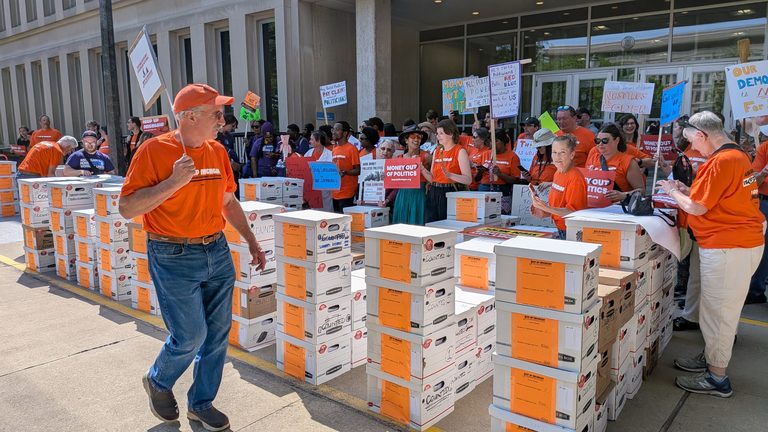
Lansing – Voters in Michigan will consider a sweeping campaign‑finance amendment on the Nov. 3 ballot. The initiative, promoted by the group Michiganders for Money Out of Politics (also called Mop Up Michigan), seeks to bar large utilities, major state contractors and anyone with a $250,000 or more state contract – including their immediate family members and key insiders – from contributing directly or indirectly to state candidates and elected officials.
What the proposal would change
Under current law, corporations already cannot give directly to candidates. Proposal 2 would extend that prohibition to corporate officers, board members and anyone with a “substantial” ownership interest in the affected companies. It would also forbid those individuals from paying for travel, meals, conference fees or other expenses for candidates or elected officials.
Limits and loopholes
The measure does not reach donors who are not contractors, nor does it target out‑of‑state entities that lack a qualifying Michigan contract. As Katie Carey, spokesperson for CMS Energy and Consumers Energy, warned, the plan could simply shift influence toward wealthy national donors and special‑interest groups.
Dark‑money nonprofits organized under 501(c)(4) status would still be able to spend, though the proposal would require any group that runs issue‑focused advertisements within 100 days of a general election or 30 days before a primary to disclose its donors and expenditures to the state.
Union involvement
Unions are not explicitly mentioned in the petition language, and the organizers say labor groups would not be affected unless a union became a state contractor. Nonetheless, unions remain able to spend through political action committees and independent expenditures, a point highlighted by the Michigan Chamber of Commerce, which called the proposal “egregious” for silencing job providers while giving unions a free pass.
Funding of the campaign
Critics note that Mop Up Michigan has accepted millions from national dark‑money outfits, including $5.4 million from All Hands on Deck Network of Massachusetts and $1.4 million from the liberal‑leaning Sixteen Thirty Fund based in Washington, D.C. Co‑chair Christy McGillivray defended the fundraising, arguing the group operates under the same rules as everyone else.
Next steps
If approved, Michigan would become the first battleground state to require donor transparency for issue ads, joining at least 11 other states with similar disclosure rules. Supporters say the measure will give ordinary Michiganders a fairer voice in Lansing, while opponents argue it leaves major sources of political spending untouched.
Voters will have the final say when they head to the polls on Nov. 3.
Original reporting: BridgeDetroit — read the source article.