Michigan voters have cast their ballots in a pivotal race for the state Supreme Court. Six candidates are competing for two open seats on the seven‑member bench, and the outcome will shape the court’s ideological balance for years to come.
Who is on the ballot
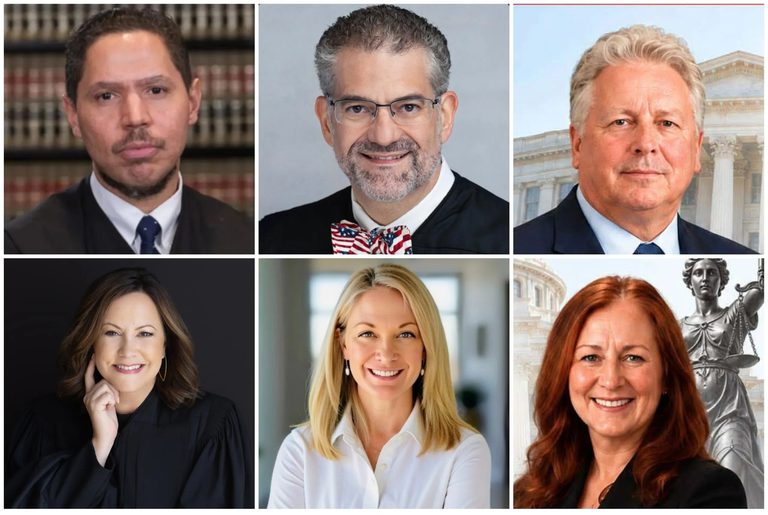
The ballot features two incumbent justices, Megan Cavanagh and Noah Hood, both nominated by the Democratic Party, and four challengers. Republican nominees include circuit‑court judges Casandra Morse‑Bills and Michael D. Warren Jr. The US Taxpayers Party has also placed two candidates, Thomas Howe and Jody White, on the ticket. Howe and White are not licensed to practice law in Michigan, making them ineligible to serve if elected.
Election dynamics
Although Michigan Supreme Court races are officially nonpartisan, the nomination process is driven by party conventions, and the candidates’ political affiliations are well known. The state GOP hoped to reduce the court’s liberal tilt by nominating experienced judges, but the incumbents have outspent their opponents by a wide margin.
According to the Brennan Center for Justice, the Democratic incumbents have spent more than $840,000 on television advertising. Advocacy groups have also poured money into the race: Justice for All Michigan contributed an estimated $2.19 million, while the ACLU Voter Education Fund spent about $400,000.
Why the court matters
The Michigan Supreme Court often has the final word on issues that affect everyday life, from the constitutionality of state statutes to the fate of ballot measures. Recent decisions have tackled mandatory life‑without‑parole sentences, declared the state’s sex‑offender registry law unconstitutional when applied retroactively, and removed over 20,000 names from that registry.
Earlier this year the court adopted a rule limiting civil arrests in courtrooms, including immigration arrests of suspected illegal immigrants, reinforcing the principle that law‑enforcement actions should respect due process.
Candidate profiles
Megan Cavanagh was first elected in 2018, graduated from Wayne State University Law School, and served as chief justice in March 2025. She has authored notable opinions on unemployment insurance, LGBTQ parenting rights, and double‑jeopardy protections. Cavanagh says her top priority is expanding access to justice, improving child‑welfare outcomes, and strengthening collaboration with tribal courts.
Noah Hood, appointed by Gov. Gretchen Whitmer in April 2025, brings experience from the Third Circuit Court and the Michigan Court of Appeals. He recently authored a 4‑3 opinion allowing the Attorney General to pursue an investigation into insulin pricing, reinforcing consumer‑protection authority. Hood emphasizes a fact‑based, methodical approach and warns against courts legislating from the bench.
Casandra Morse‑Bills is a circuit‑court judge in northern Michigan who describes herself as a rule‑of‑law judge. She argues that recent Supreme Court opinions have been “unfair, unjust and not equal under the law,” and pledges to restore public trust in the judiciary.
Michael D. Warren Jr. has served on the Oakland County Circuit Court for more than two decades, overseeing hundreds of jury trials. He founded Patriot Week, a civic‑engagement program honoring the Constitution’s signing, and promises to bring his extensive courtroom experience to the high court.
What voters can expect
Voters will receive a ballot that lists the six names without party labels, but the candidates’ affiliations are widely reported. The race underscores the importance of an informed electorate, as the court’s decisions will continue to influence Michigan’s legal landscape on everything from criminal sentencing to civil rights.
Local election officials have confirmed that all precincts reported turnout accurately and that results will be posted as soon as they are certified. Michigan residents are encouraged to stay engaged and follow the upcoming announcements on the final composition of their Supreme Court.
Original reporting: BridgeDetroit — read the source article.