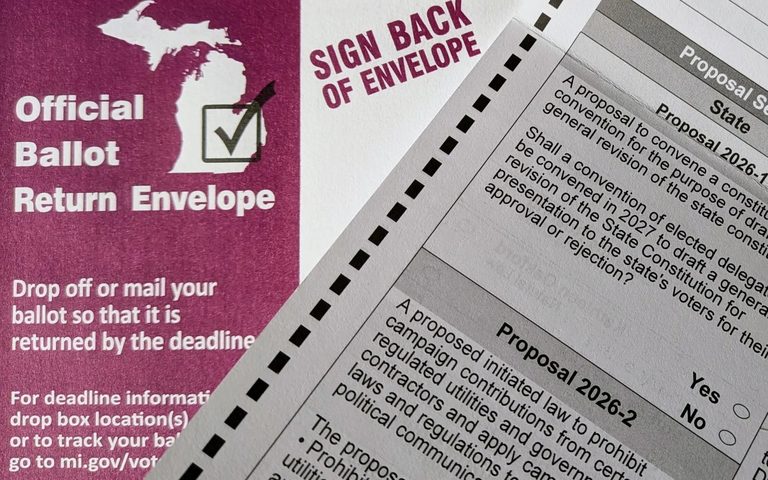
LANSING — On Nov. 3, Michigan voters will confront two statewide ballot measures that could have lasting effects on the state’s constitution and on political spending by regulated utilities and large government contractors.
Proposal 1: Call a Constitutional Convention
Proposal 1 asks voters to convene a constitutional convention. The measure automatically appears on the ballot every 16 years and has been rejected in every prior election. A coalition of groups opposed to the measure, including Protect MI Constitution, has raised nearly $3.2 million and spent about $2.7 million on a “no” campaign.
Supporters argue the convention would provide a non‑partisan avenue to address gridlock in Lansing, allowing citizens to discuss issues such as data‑center development and property‑tax rates. They contend that a convention could bypass entrenched partisan battles and give ordinary Michiganders a direct voice in shaping the state’s foundational document.
Opponents warn that a convention could be swayed by special interests and that delegates might repeal popular provisions, including the voter‑approved amendment guaranteeing abortion access. Gov. Gretchen Whitmer has voiced concern that delegates could remove such protections.
If approved, the process would begin with Democratic and Republican primaries to select delegates, followed by a general election by mid‑2027. Voters would ultimately choose 148 delegates—one for each state House and Senate district—without a requirement for partisan balance. Delegates would convene in Lansing by Oct. 5, 2027 (or earlier if law permits), set their own rules, and be paid at rates determined by the Legislature. The convention could last an indefinite period, meeting as often as needed, and would have broad authority to amend the constitution. After the convention adjourns, a separate statewide question would ask voters to adopt the new constitution, with a minimum 90‑day waiting period before the vote.
Proposal 2: Ban Utility and Contractor Contributions
Proposal 2 seeks to prohibit direct or indirect contributions to Michigan politicians by the state’s regulated utilities—DTE Energy and Consumers Energy—and by companies holding contracts worth more than $250,000 with the state government. The ban would also extend to immediate family members and individuals with substantial ownership interests or board positions at those companies.
Proponents, organized under Michiganders for Money out of Politics, argue the measure would curb “pay‑to‑play” politics by preventing utilities and large contractors from influencing elected officials. They note that existing state law already bars corporations from contributing directly to candidates, and this proposal would close the loophole that allows company officials and their families to funnel money indirectly.
Opponents claim the ban infringes on free‑speech rights and could lead to legal challenges. They also point out that the measure does not restrict “dark money” spending by 501(c)(4) nonprofits, though it does require groups that run issue ads within 100 days of a general election or 30 days before a primary to disclose donors and expenses.
Should voters approve Proposal 2, opponents are likely to pursue lawsuits, but the language includes a severability clause: if any portion is found invalid, the remaining provisions would stay in effect.
What Voters Should Know
Both proposals will appear on the November ballot, and early polling suggests some voter frustration with the status quo in Lansing could make the measures competitive, even though no organized opposition to Proposal 1 has emerged. Voters who reject Proposal 1 will not see another convention question for another 16 years. Those who reject Proposal 2 will maintain the current contribution rules, which already limit corporate donations but leave room for indirect influence.
Local advocacy groups, political strategists, and the Whitmer administration are urging citizens to consider the long‑term implications of each measure before casting their ballots.
Original reporting: BridgeDetroit — read the source article.