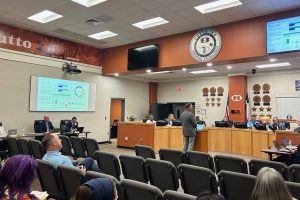
LANSING, Michigan – A panel hosted by Michigan State University’s Institute for Public Policy and Social Research on Tuesday brought together scholars, industry representatives, and environmental advocates to examine how the state’s growing data center industry could affect local water supplies and the electric grid.
Reliability benefits for consumers
Dr. Erik Nordman, director of the Institute of Public Utilities at Michigan State University, emphasized that modernizing the electricity system to support data centers can improve overall grid reliability. “If the electricity system is more reliable, we’re all going to benefit from that,” Nordman said, noting that upgrades intended for high‑tech facilities often spill over to residential customers.
Water‑use concerns and mitigation efforts
Water consumption emerged as a major point of discussion. Jean Hardy, associate director of the university’s Quello Center, said many developers are responding to public concerns by adopting water‑saving technologies. “Most data centers that are being built today are trying to conserve water because they see the controversies happening around water and they want to be responsible developers,” Hardy explained.
However, Hardy cautioned that such practices are not universal. She cited a proposed Google data center in Van Buren Township that could require more than two million gallons of water per day, underscoring the need for consistent standards across projects.
Environmental groups call for transparency and stronger safeguards
Separately, environmental organizations convened at the Michigan Capitol to demand greater transparency and community input on data‑center incentives. Marta Johnson, a legislative organizer with the Sierra Club Michigan, warned that the rapid expansion of artificial‑intelligence infrastructure could outpace existing oversight. Johnson also questioned the opacity of tax incentives offered to developers.
Clean Water Action’s water‑justice manager, Nichole Keway Biber, argued that developers already following strong environmental practices should not oppose codifying those standards into law. “If responsible data center owners exist, they shouldn’t be worried about real strong protections that are codified into law, enforceable, hold people accountable,” she said.
Community voices and the need for accurate information
Amanda Robert, network director for the Michigan Climate Action Network, highlighted grassroots concerns, noting that residents in her network have been voicing worries for over a year. “Because we listen to the communities that are a part of our network, we’ve been hearing from them for a year and a half now. They’re just really concerned; they’re overwhelmed with misinformation. They don’t know what information to trust,” Robert said.
Balancing growth with stewardship
The discussion underscored a central tension: data centers promise economic development and improved grid stability, yet they also pose challenges for water resources and environmental oversight. Experts agreed that transparent incentive structures, robust water‑conservation standards, and community involvement are essential to ensure that growth does not come at the expense of Michigan’s natural resources.
As the state continues to evaluate new data‑center proposals, stakeholders expect ongoing dialogue about electricity reliability, water stewardship, and the role of public oversight in shaping a sustainable technology future for Michigan.
Original reporting: WOWO News/Talk (Fort Wayne) — read the source article.