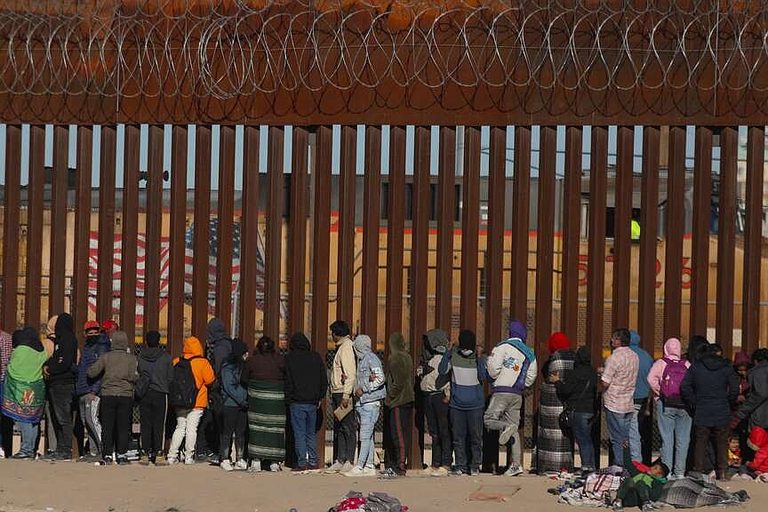


Mexico’s government is stepping up its diplomatic effort to demand answers from the United States about the deaths of 17 Mexican nationals who died while in the custody of U.S. Immigration and Customs Enforcement (ICE). President Claudia Sheinbaum told reporters that the growing toll of fatalities is “too many cases” and that Mexico will continue to press for investigations.
Diplomatic complaints filed across the country
In recent weeks, Mexican diplomats have sent formal complaints—known as denuncias—to state attorneys general and district attorneys in eight states where the deaths occurred. The complaints ask prosecutors to investigate each case and to provide transparency about the circumstances surrounding the fatalities.
So far, only four states—California, Texas, Florida and Illinois—have acknowledged receipt of Mexico’s requests. Florida’s attorney general’s office was the only one to issue a definitive response, agreeing with ICE that the death of 19‑year‑old Royer Pérez Jiménez at the Glades County Detention Center was a “presumed suicide.”
Legal hurdles limit Mexico’s standing
Legal experts note that Mexico faces a steep uphill battle. While the Mexican government can file complaints, it lacks standing to bring a case directly before U.S. courts. “A request for investigation from the Mexican government probably has a little more impact than a request from a random private citizen,” said Aaron Reichlin‑Melnick, a senior fellow at the American Immigration Council.
Human Rights Watch and Physicians for Human Rights reported in June that at least 52 migrants—including 14 Mexican citizens—have died in ICE custody since the start of the second Trump administration, with nine additional deaths occurring during ICE operations since 2025.
Specific incidents draw attention
The most recent high‑profile case involved Lorenzo Salgado Araujo, a 52‑year‑old construction contractor who was shot by ICE agents in Houston last month. His death prompted Sheinbaum to reiterate Mexico’s commitment to defending its citizens abroad.
Another flashpoint is the private Adelanto ICE Processing Center in San Bernardino County, California, where four Mexican nationals have died. Detainees’ representatives have filed a civil class‑action lawsuit alleging systemic medical neglect, inadequate food and water, and mold contamination. In July, a federal judge ordered ICE to improve conditions at Adelanto, mandating better water, food, sanitation and medical care.
Mixed responses from local authorities
While some local district attorney offices have said they are “evaluating” Mexico’s complaints, others, such as Ventura County’s DA office, claim they have received no communication from Mexico at all. Ventura County was the site of a large ICE operation in July 2025 that resulted in hundreds of arrests at a cannabis facility.
Mexican Foreign Secretary Roberto Velasco said the government has received partial or no responses from the eight states where the deaths occurred. He emphasized that Mexico will continue to use every legal and diplomatic avenue to bring attention to conditions in U.S. detention centers.
Broader implications for immigration policy
The dispute underscores the broader tension between the Trump administration’s immigration enforcement strategy and the concerns of neighboring countries about the treatment of migrants in U.S. custody. Critics argue that the administration has not pursued these cases with sufficient vigor, while ICE maintains that it thoroughly investigates every death.
As Mexico escalates its diplomatic pressure, the outcome may influence future cooperation between the two nations on immigration enforcement, detainee rights, and cross‑border humanitarian concerns.
Original reporting: Texarkana Gazette — read the source article.