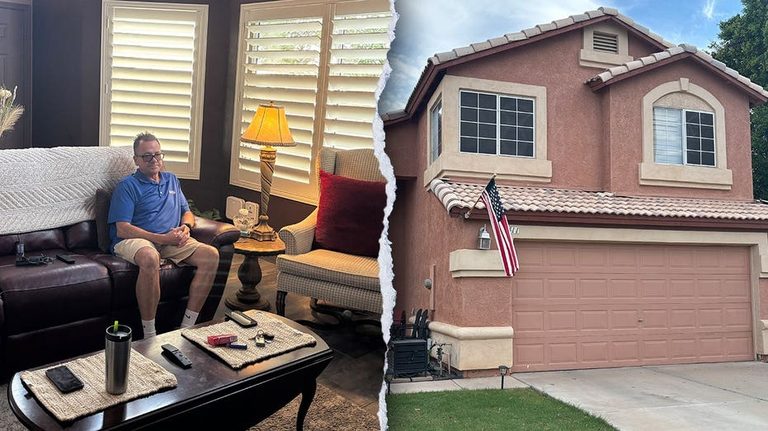
In Mesa, Arizona, homeowner Toby Newton, 53, is fighting to keep the four‑bedroom house he bought in 2022 for $475,000. After losing his sales job and being diagnosed with diabetes, Newton fell behind on his quarterly homeowners’ association (HOA) dues, which total less than $1,000 per year.
Newton says he was a year and a half behind on payments because both he and his partner were dealing with serious health issues, including his partner’s battle with breast cancer. “I called the HOA to make an arrangement with them to get them paid and they wouldn’t talk to me,” Newton told Fox News Digital. “They told me I had to talk to their attorney and that’s when it blew up.”
The Superstition Springs Community Master Association, which governs the HOA, required Newton to pay about $170 every three months. Over time, his balance grew to $977. Newton offered to add $50 per month, and later $200 per month, to his regular assessments in an effort to catch up, but the HOA denied both proposals.
Unable to reach a payment plan, the HOA initiated foreclosure proceedings. The debt later ballooned to nearly $10,000, primarily due to attorney’s fees. In November 2025, the home was sold at a public auction for $8,172, according to the Mesa Tribune. Newton says he was not notified of the auction until two days before it occurred and that he has not yet been forced to vacate the property.
“The sale happened and I’m still in the house,” Newton said. “I haven’t been kicked out yet. That’s what I’m trying to avoid. I’m just trying to save it because I don’t know how it could go from owing them $977 to $10,000.”
Newton and his partner have started an online fundraiser in hopes of raising enough money to buy the home back. “We are holding on to hope that we may still have a chance to buy our home back,” the fundraiser states.
Broader HOA trends
HOAs across the United States have faced criticism for aggressive collection tactics, including fines and foreclosures for unpaid dues. Real‑estate experts attribute the heightened enforcement to rising operating costs, shrinking reserve funds, and concerns that unpaid assessments could jeopardize essential community services. The Wall Street Journal reported that HOA‑related foreclosures have risen nearly 40 % compared with two years earlier.
While the Mesa case highlights the personal impact of such policies, it also reflects a national pattern of HOAs tightening their financial controls. Homeowners facing similar situations are encouraged to review their association’s governing documents, seek legal counsel early, and explore all possible payment arrangements before matters escalate to foreclosure.
Original reporting: Fox News (HLL/CB) — read the source article.