Residents of Merrimack, New Hampshire, have been reviewing new property assessments that the state requires every five years. While many expected a steep rise in property taxes after home values surged, the town’s recent tax‑rate adjustment has cushioned the impact for most homeowners.
How the numbers break down
In 2025 the average home in Merrimack was assessed at $371,400. This year that figure climbed to $558,000 – a 50% increase in assessed value. At first glance, such a jump could suggest a comparable surge in property taxes.
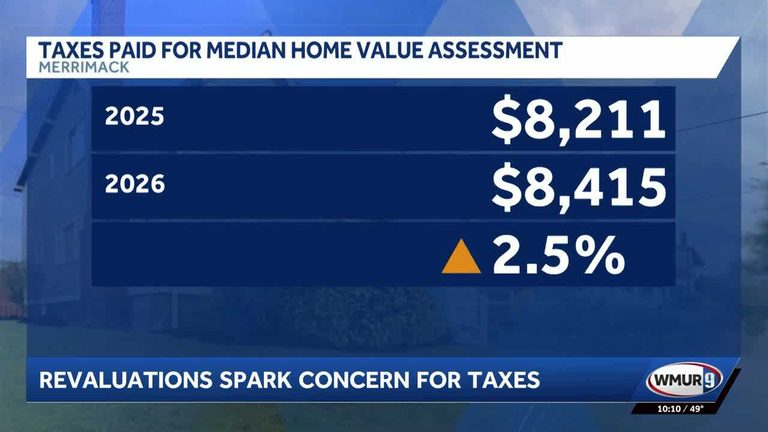
However, the town’s tax rate fell from $22.11 per $1,000 of assessed value in 2025 to $15.08 this year. Applying the new rate to the 2025 average assessment would have produced a tax bill of $8,211. Using the 2026 assessment and the lower rate, the average homeowner now pays $8,415.
That represents a 2.5% increase in the average tax bill, far below the 50% rise in home values. The reduction in the tax rate is a direct response by the town to the reassessment, aiming to keep the overall tax burden manageable for families.
What residents are saying
Katherine Joseph, a Merrimack homeowner, described her reaction to the new assessment: “I was upset, shocked and stunned. I thought the value was way too high. And of course, the question is, you know, what’s it going to do to my taxes?” After contacting town officials, Joseph was able to work with the assessor’s office to lower her individual reassessment, illustrating that the appeals process can provide relief for those who feel their property has been over‑valued.
Appeals and next steps
Homeowners who disagree with their assessment have the right to appeal. The town provides guidance on the appeals process on its website, and residents are encouraged to gather comparable sales data and submit a formal request.
While Merrimack’s experience reflects a single municipality, it offers a useful case study for other New Hampshire towns facing similar reassessments. The state’s five‑year cycle is designed to keep property valuations current, but the accompanying tax‑rate adjustments can vary widely depending on local budget needs and policy choices.
Implications for the broader community
In a period of rising living costs, the modest tax increase in Merrimack may provide a measure of relief for families concerned about affordability. It also underscores the importance of local government transparency: by publishing both the new assessments and the revised tax rate, the town allows residents to see exactly how their tax bills are calculated.
For homeowners elsewhere in New Hampshire, the Merrimack example highlights two key takeaways: first, a jump in assessed value does not automatically translate into a proportional tax hike; second, engaging with the assessor’s office early can help address any discrepancies before they affect the final tax bill.
Looking ahead
The town will continue to monitor its budget and tax‑rate structure throughout the year. Any further adjustments will be communicated through town meetings and official notices, ensuring that residents remain informed about how their tax dollars are being allocated.
Original reporting: WMUR (Hearst) – local news — read the source article.