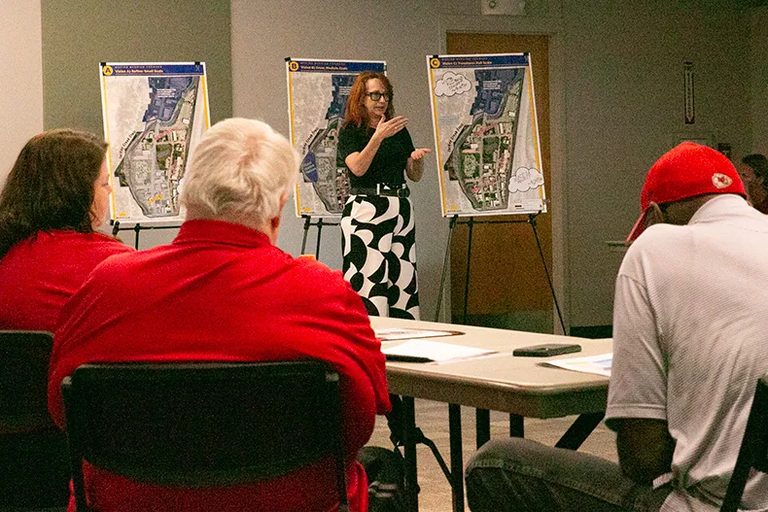
The Merriam City Council on Monday voted 7‑0 to endorse a half‑cent sales tax that would fund a sweeping downtown revitalization effort. The council’s resolution clears the way for a mail‑in ballot on March 2, 2027, giving every registered voter in Merriam the chance to approve the measure.
Funding the master plan
The proposed tax would add $0.50 to every $100 purchase made in the city. Over a ten‑year period, the tax could generate as much as $52 million, a portion that city officials say will help cover the $196.3‑$299.3 million cost of the downtown master plan.
According to the plan, $43.1 million of the projected revenue would come from non‑residents—shoppers drawn to Merriam’s strong commercial pull. When combined with two county‑wide special taxes that are set to sunset at the end of 2027, the total sales‑tax rate for shoppers would remain at the current 9.475%, roughly $9.50 on a $100 purchase.
Why the city is moving forward
City Administrator Chris Engel called Merriam’s “economic engine” a key asset that should be leveraged for the community’s benefit. “Now that we have paid off the debt on the community center that saved millions of dollars, this is the time to invest in the next big thing—our downtown,” Engel said.
The council’s commitment comes after a year‑long master‑plan process that included stakeholder meetings, pop‑up events, online surveys, an ETC Institute survey, and open houses. Four city‑backed surveys conducted between 2020 and 2026 consistently showed that more than two‑thirds of respondents want to see downtown Merriam revitalized.
What the plan entails
The “Transform” option, which received the council’s strongest support, calls for removing the downtown area from the floodplain and dramatically expanding housing and commercial space. Two implementation pathways were presented:
- Partnering with HNTB, a local engineering firm, for an estimated $196.3 million project focused on fill and floodwalls.
- Working with the U.S. Army Corps of Engineers for a $299.3 million effort that would add floodwalls, berms and storage capacity.
Most of the physical changes would occur after 2036, once flood‑control work is complete.
Council’s stance on the ballot
Even if voters ultimately reject the tax, the city has pledged to pursue a smaller‑scale downtown investment. Councilmember Staci Chivetta, who has served on two downtown committees, emphasized that “doing nothing is not an option.” The council will consider adopting formal ballot language at its Nov. 23 meeting.
Public comments on the draft master plan are being accepted through Nov. 22. Residents can submit feedback online via the city’s website.
Original reporting: Johnson County Post (Overland Park) — read the source article.