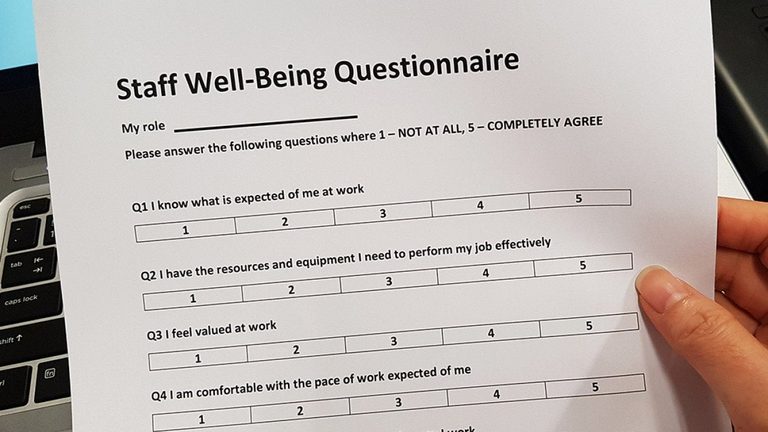
Mental health assessments are a crucial tool for employers to support their employees’ well-being. A strong assessment can help employees find the right care and resources, while a weak one can create friction and delay treatment. Employers are not responsible for diagnosing employees, but they can offer a benefit that identifies needs safely and routes employees to appropriate care.
What is a Mental Health Assessment?
A mental health assessment is a structured way to understand a person’s symptoms, goals, functioning, preferences, and level of need. In a workplace benefit, it should help route employees to the right care, not simply produce a score. A strong assessment does not ask questions for their own sake, but uses the answers to guide care.
Employers should look for assessments that are clinically grounded, easy to complete, and connected to a clear action plan. The assessment should cover goals, current symptoms, functioning, safety signals, care preferences, social needs, and progress over time. HR leaders should evaluate whether the assessment is built into a care model that can act on the information it collects.
Key Components of a Mental Health Assessment
A strong assessment should have several key components, including clinical validation, dynamic branching, safety protocols, care routing, personalization and matching, ongoing measurement, and reporting for employers. The assessment should also be supported by appropriate privacy and safety protocols, and employees should understand how their information is used and protected.
Original reporting: El Paso News (HLL/CB) — read the source article.