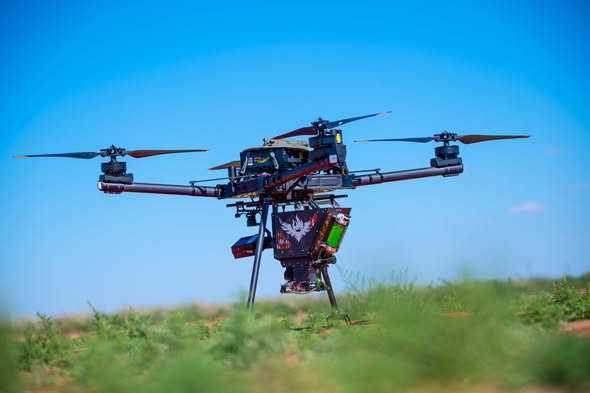
The U.S. Air Force is rolling out a cutting‑edge wildfire‑mitigation program at the Melrose Air Force Range in Curry County, New Mexico. Officials announced that the range will begin using unmanned aircraft systems (UAS) to drop specially designed ignition spheres—often called “fireballs”—to conduct prescribed burns.
How the technology works
Unlike traditional hand‑lit prescribed fires, the drones can release the ignition spheres from a safe altitude, allowing fire crews to start controlled burns without exposing personnel to hazardous conditions on the ground. The spheres ignite upon contact with vegetation, creating a predictable fire front that helps reduce excess fuel and lower the likelihood of uncontrolled wildfires.
Benefits for firefighters and the community
Range officials say the new system offers several advantages. First, it minimizes the physical risk to ground crews who would otherwise have to manually set fire lines. Second, the precision of drone deployment enables more accurate placement of burns, which can protect nearby communities and critical infrastructure. Finally, the approach is described as “one seriously cool way to fight fire with fire,” highlighting the Air Force’s commitment to innovative, safety‑first solutions.
Local impact and future plans
Melrose Air Force Range serves a large swath of central New Mexico, an area that has seen an uptick in wildfire activity in recent years. By adopting this technology, the base hopes to set a model for other federal and state land managers facing similar fire‑risk challenges. Officials anticipate that the drone‑based system will be evaluated over the coming months, with the possibility of expanding its use to other ranges and public lands across the Southwest.
Community response
Local residents and fire‑management professionals have expressed cautious optimism. “Anything that reduces the danger to our firefighters while improving how we manage vegetation is a win,” said a representative from the New Mexico State Forestry Division. The Air Force plans to hold informational briefings for nearby towns to explain the safety protocols and answer any questions.
Looking ahead
The adoption of drone technology for prescribed burns reflects a broader trend of leveraging unmanned systems for public‑safety missions. As climate change continues to exacerbate fire conditions, innovations like this could become essential tools for protecting families, homes, and natural resources throughout the region.
Original reporting: KOAT Albuquerque — read the source article.