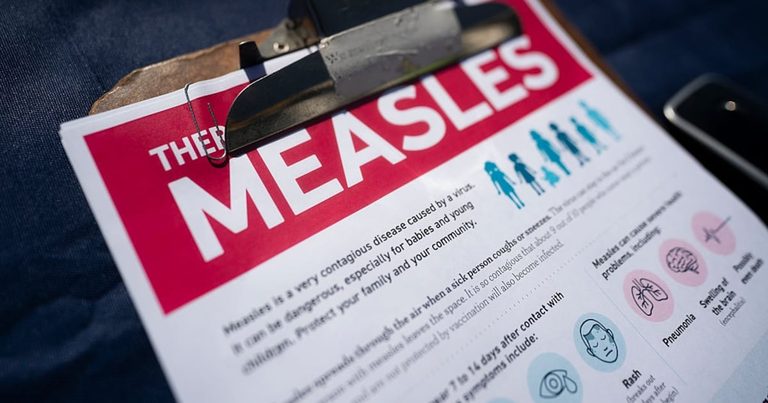
Ohio’s measles count has climbed to 327 cases this year, according to the Ohio Department of Health, with four of those cases linked to Mercer County. The surge contributes to a national tally of more than 5,400 measles cases, the highest level since 1991, as reported by the Centers for Disease Control and Prevention (CDC).
Dayton health officials say the state’s vaccination rates have slipped, increasing the risk of further spread. Dr. Bruce Vanderhoff, director of the Ohio Department of Health, told WHIO that “we’ve been lulled into complacency about the importance of measles vaccination” and warned that the current situation represents a “real step backward for the health of the state of Ohio, but also the nation.” He added that the recent hospitalizations and six deaths nationwide were “vaccine‑preventable.”
In Montgomery County, no measles cases have been reported yet, but Dr. Becky Thomas, medical director of Public Health – Dayton & Montgomery County, cautioned that the virus is “the most contagious disease we know of” and can remain airborne for up to two hours after an infected person leaves a space. She emphasized that “one dose of the measles vaccine is 93% protective, and two doses are 97% protective,” urging residents to verify their immunization status.
Dayton Children’s Hospital is preparing for potential cases. Dr. Michael Klatte, chief of infectious diseases at the hospital, said staff are “feverishly preparing because we know it’s only a matter of time until we see cases here in our area.” Local parent Ashley Ross expressed concern, noting she has ensured her children are vaccinated but worries about others who may not be.
The CDC’s director, Dr. Erica Schwartz, reiterated that the loss of the measles elimination designation does not change the evidence‑based approach to control the disease. She noted a $100 million investment in state and local health departments to reach affected communities and stressed that vaccination remains the key tool.
Vaccination coverage among Ohio kindergarteners dropped from 92.5% in 2019 to 88% this year, according to the Ohio Department of Health. Health officials encourage adults uncertain of their vaccination history to receive the vaccine again, as it is safe even without prior records.
Residents are advised to check their vaccination status promptly and visit local clinics or pharmacies offering the measles vaccine to help curb the outbreak and protect vulnerable community members.
Sources: whio.com, dayton247now.com