Rail traffic on the 19‑kilometer Kerch Bridge, the vital conduit for military and civilian supplies to illegally annexed Crimea, was halted Thursday after a third Ukrainian aerial strike in four days. The overnight attack damaged a large section of the bridge’s road deck and caused an arch to collapse, prompting the Moscow‑appointed head of Crimea, Sergei Aksyonov, to order a temporary suspension while officials assessed the damage.
Timing coincides with high‑level diplomatic talks
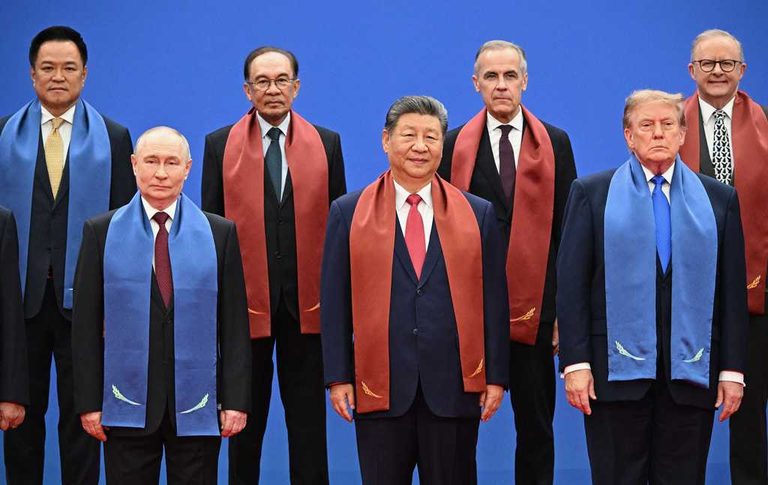
The strike occurred as President Donald J. Trump met with President Vladimir Putin in China, a meeting the Ukrainian side described as an attempt to embarrass the Russian leader and demonstrate Kyiv’s continued ability to strike deep within Russian‑controlled territory. Trump, who called Putin “my friend” during the visit, reiterated the United States’ commitment to a strong, principled stance against aggression while supporting Ukraine’s right to defend its sovereignty.
Ukrainian objectives and Russian response
Ukrainian officials framed the series of attacks as a calculated effort to undermine Russia’s narrative of inevitable victory and to remind the world of the illegal status of the Crimea annexation. According to Ukrainian President Volodymyr Zelenskyy, the latest strike was the culmination of a multi‑stage operation that began weeks earlier.
The Russian Defense Ministry reported that its air defenses intercepted 53 Ukrainian drones over ten Russian regions during the night. In turn, Ukrainian authorities said Russia launched anti‑ship missiles and 98 drones at Ukrainian targets, registering hits at 18 locations.
Impact on the bridge and regional logistics
The Kerch Bridge is a strategic lifeline for Russian forces stationed in Crimea, enabling the rapid movement of troops, equipment, and civilian goods. Its disruption, even temporarily, hampers logistical flows and highlights the bridge’s vulnerability as a symbol of Moscow’s illegal annexation.
Train traffic is expected to resume around 4 p.m. local time (1300 GMT) on Thursday, according to Aksyonov, after damage assessments are completed. Road traffic remains closed following earlier strikes that damaged the bridge’s surface.
Broader diplomatic context
Hours after the strike, U.S. envoys Jared Kushner and Steve Witkoff met with President Zelenskyy and European leaders in Berlin to discuss a path toward a lasting peace. Kushner emphasized Washington’s priority to strengthen coordination with Ukraine and Europe, and to prepare the agenda for the next round of multilateral negotiations.
European leaders, including German Chancellor Friedrich Merz, French President Emmanuel Macron, and British Prime Minister Andy Burnham, are convening to discuss post‑war security arrangements and to ensure Russia does not threaten NATO borders again.
Domestic political implications
Within the United States, the ongoing conflict and the recent strikes may influence upcoming congressional debates on aid to Ukraine. Democrats, buoyed by recent midterm victories, could seek to raise the issue of U.S. support, while the Trump administration continues to prioritize a restrained, results‑oriented approach.
Prince Harry, in a recent interview, offered a veiled criticism of the U.S. policy toward Ukraine, suggesting a disconnect between the administration’s stance and the American public. The comment underscores the broader international scrutiny of the United States’ role in the conflict.
Looking ahead
Both sides appear poised to continue leveraging military and diplomatic tools. Ukraine’s domestically developed long‑range drones and missiles have repeatedly struck deep inside Russian territory, while Russia relies on strategic bombing and attempts to wear down Ukrainian resistance ahead of winter.
For now, the Kerch Bridge remains a focal point of the war’s logistics and a potent reminder of the illegal annexation that continues to shape regional security dynamics.
Original reporting: WLKY Louisville — read the source article.