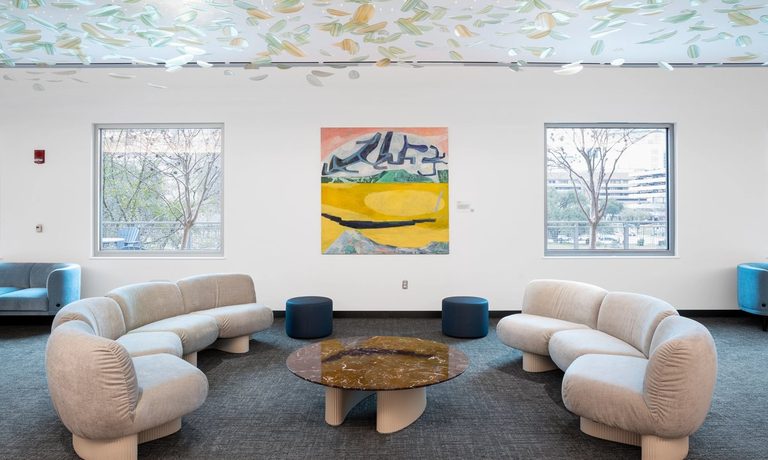
Houston’s University of Texas MD Anderson Cancer Center is embedding contemporary art into its upcoming hospital buildings, a move the institution says will enhance patient experience and reflect its status as the nation’s leading cancer treatment center.
According to The Art Newspaper, the initiative began in January 2025 when MD Anderson launched a contemporary art program aimed at acquiring ambitious fine‑art pieces. Since then, associate vice president for art experience Jennifer Finkel has overseen the addition of nearly 300 works to a collection that already includes roughly 9,000 objects.
The art effort is tied to a broader $2.9 billion expansion of MD Anderson’s facilities across the Texas Medical Center, the world’s largest medical complex. Construction projects are scheduled for completion between 2027 and 2032, providing opportunities to commission site‑specific works and integrate art directly into the architecture rather than merely hanging pieces on walls.
Funding for the art program comes from a percent‑for‑art model based on construction costs, supplemented by philanthropic support and qualifying donations. While the standard 1 % allocation of the $2.9 billion expansion would equal $29 million, the total budget for the art initiative has not been publicly disclosed.
Finkel emphasizes that the goal is to make art a “cornerstone” of the patient journey. She notes that artworks are selected for their ability to offer reflection, distraction, and emotional wellbeing during treatment. Considerations include the clinical context, patient demographics, and the amount of time visitors spend in a given space. For example, a corridor that sees quick traffic requires different artwork than a waiting room where patients may sit for an hour or more.
The curatorial team also uses art for practical purposes such as wayfinding. A colourful print can serve as a visual marker to help patients locate elevators or exits within the sprawling campus.
As MD Anderson prepares new specialty spaces, the art program is already planning collections for the upcoming Colorectal Cancer Center and a dedicated prostate cancer clinic. Demographic data prompted a shift in the Colorectal Center’s art strategy after learning that one‑third of patients are aged 35 to 45, leading to selections that may resonate with younger adults.
“With all of the growth and new buildings, this is an opportunity to create a world‑class art collection,” Finkel said, adding that the integration of art aligns with the institution’s mission to deliver world‑class care and research.
What’s next: MD Anderson expects to begin installing site‑specific artworks as new buildings reach construction milestones, with the first pieces slated for placement in the new colorectal and prostate clinics during the 2027‑2032 rollout.
Sources: theartnewspaper.com