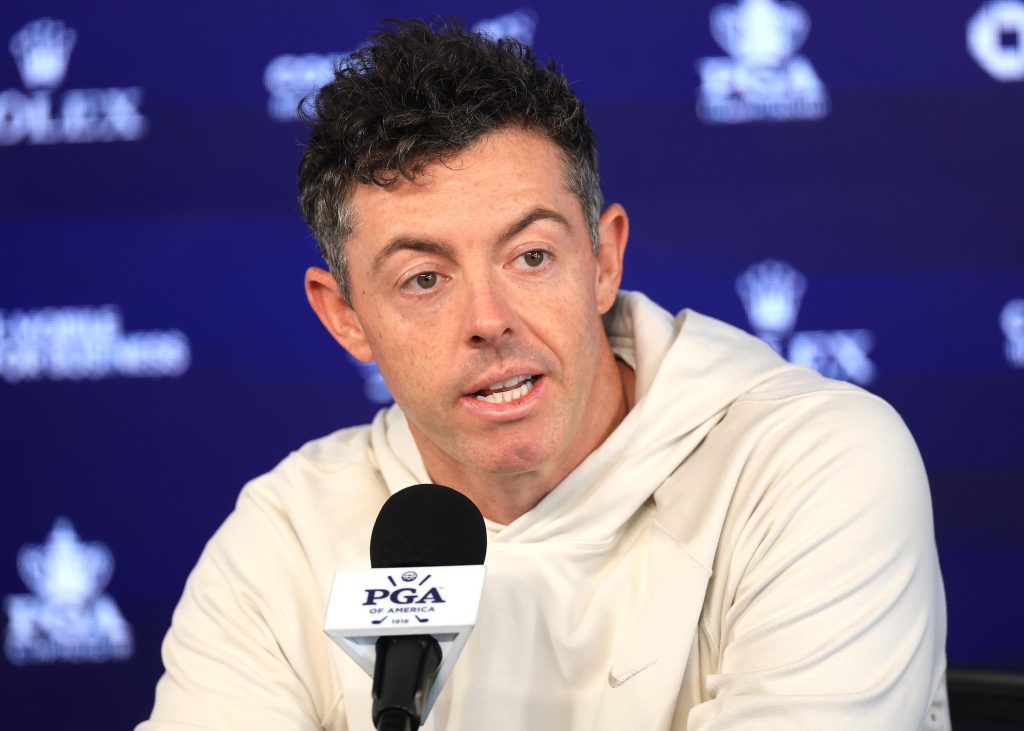
Rory McIlroy is the focal point this PGA Championship week at Aronimink in Newtown, Pennsylvania, and his comments on the course setup have stirred the golf world. McIlroy, fresh off his Masters defence, told reporters in Philadelphia that off-the-tee strategy is remarkably simple at Aronimink, and those words have raised questions about course design and major championship character. Players, fans, and commentators are watching to see whether the field can punish or be forgiven for wayward drives during this second major of the season.
Aronimink is hosting the PGA Championship and the course has been under a microscope since practice rounds began. Rory McIlroy’s voice carries weight because he is both a recent major winner and one of the sport’s leaders, so when he says something blunt it echoes through the locker room. His point about teeing off without much strategic worry landed like a challenge to course architects and tournament officials. The concern is this: if majors stop forcing strategic decisions, are we losing a layer of competitive integrity?
On Tuesday morning McIlroy said there was little strategic demand off the tee and that comment immediately fueled the rollback debate. The rollback argument is simple: if players can overpower or recover from errant tee shots, distance becomes king and nuance fades. For years pundits and players have argued for a balance between length, accuracy, and thoughtful defense. Aronimink this week looks like a test of whether that balance still exists at the highest level.
Hello from Aronimink where Rory is speaking and seems to have no issue sharing his honest thoughts on the course/setup:
“Off the tee, the strategy is non-existent.” pic.twitter.com/PnZwb6lTxK
— Paolo Uggetti (@PaoloUggetti) May 12, 2026
Fans and analysts are parsing what this means for contenders and eventual champions at Aronimink. If the course allows recovery from long but errant drives, players with length will benefit and shotmakers with strategic finesse might be sidelined. Conversely, if the rough and greens prove more punitive than expected, the commentary about ease will quickly change. The drama will come from watching how players adapt, and whether strategy off the tee returns to the conversation by Saturday and Sunday.
The way Aronimink has been set up this week could shape conversations long after the trophy is hoisted in Philadelphia. Tournament setup is not just about aesthetics or tradition; it determines whether clubs are penalized, whether recovery shots are possible, and whether golfers must plan their way around holes. When elite players like McIlroy say strategy is unnecessary, that uptick in simplicity can feel like a crack in the major championship formula. The pressure falls on course managers and the PGA to ensure the contest remains both fair and demanding.
Rory defended his Masters title earlier in the season and that victory amplifies everything he says now. Champions get extra listening time and scrutiny, and his comments this week will be held against every round played at Aronimink. The field will either validate his point or disprove it by the weekend, and either outcome will shape debates about course preparation moving forward. Golf’s governing bodies watch these narratives closely because public opinion often drives rule tweaks and setup philosophy.
Players who thrive on creativity and course management will be particularly interested in how penalty areas, bunkers, and rough are positioned. If those elements are minimized in favor of a freewheeling aerial game, accuracy becomes less valuable. That shift could accelerate a trend toward raw distance dictating results in majors. On the other hand, if Aronimink bites back, those who accused the course of being soft will be quieted and strategy will reclaim pride of place in post-round conversations.
For casual fans tuning in from across the country, this debate might feel academic, but it affects the spectacle of a major. Majors are where drama lives: where one fielding error or inspired recovery can rewrite legacies. When strategy is sidelined, drama can turn into a straightforward power contest, and some viewers may feel the tension evaporates. This week in Newtown and Philadelphia, we will see which version of the sport gets the spotlight.
Whatever the leaderboard reads by Sunday, Aronimink’s setup and Rory McIlroy’s comments will be part of the picture that pundits analyze for months. The course, the players, and the policies that guide major setups are all on display, and each round will contribute a data point to the rollback conversation. People will watch drives, misses, recoveries, and how officials respond next year. For now, the real story is live on the grass in Pennsylvania and every swing could tilt the debate in a new direction.