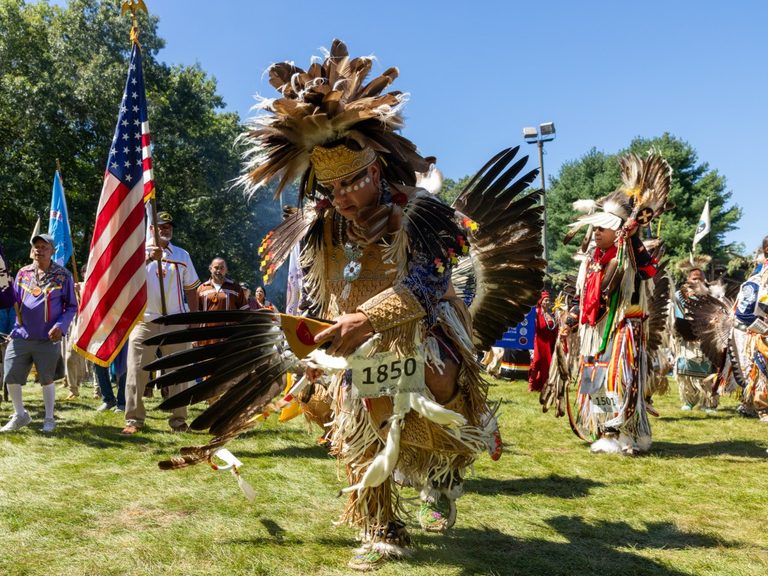
The Mashantucket Pequot Cultural Grounds in Connecticut played host to the annual Schemitzun: Feast of Green Corn and Dance, a three‑day celebration of harvest traditions that attracted tribal nations from coast to coast, north to south. Vice‑chairwoman Latoya Cluff, a member of the Mashantucket Pequot Tribal Council, said the open‑to‑the‑public event highlighted the shared purpose of Indigenous peoples: “to honor our ancestors, keep our history, our culture alive.”
Traditional Activities and Performances
Visitors enjoyed dancing competitions, championship drum groups, and authentic Native cuisine. Demonstrations included open‑fire cooking, wampum making, canoe carving, and other lifeways set against a replica of a 17th‑century Pequot village. A flute player began the festivities as Cluff helped dress her nine‑month‑old grandson, Essence Brown Young, in traditional regalia for the Grand Entry.
Stories from Attendees
Amos Key Jr., a member of the Six Nations of the Grand River from Ontario, reflected on his 30‑year participation, noting, “These are special moments for all tribes, not just one. We have to continue these important traditions.” Keith Anderson, representing the Nansemond Indian Nation, drove more than 10 hours from Virginia to attend, emphasizing the festival’s role in uniting tribes across the United States and Canada.
Elizabeth James‑Perry of the Wampanoag Tribe of Gay Head (Aquinnah) has attended since the festival’s inception. While hand‑sewing a cattail mat outside the replica village, she said the event helps combat the erasure of Native peoples by providing a public forum for education and cultural expression.
Lauren Peters of the Mashpee Wampanoag Tribe demonstrated traditional oyster shucking, preparing a simple lunch over an open fire. The day’s program also featured a Grand Entry where dozens of intertribal drum groups performed, and hundreds of participants danced together, celebrating resilience and continuity.
Community Impact
Cluff reminded attendees that Indigenous peoples have survived attempts at erasure and continue to speak their languages, wear their clothing, and hold powwows. “We can come and gather, receive medicine, send our prayers, and cook our traditional foods,” she said, underscoring the festival’s role in preserving cultural heritage for future generations.
Original reporting: The Connecticut Mirror — read the source article.