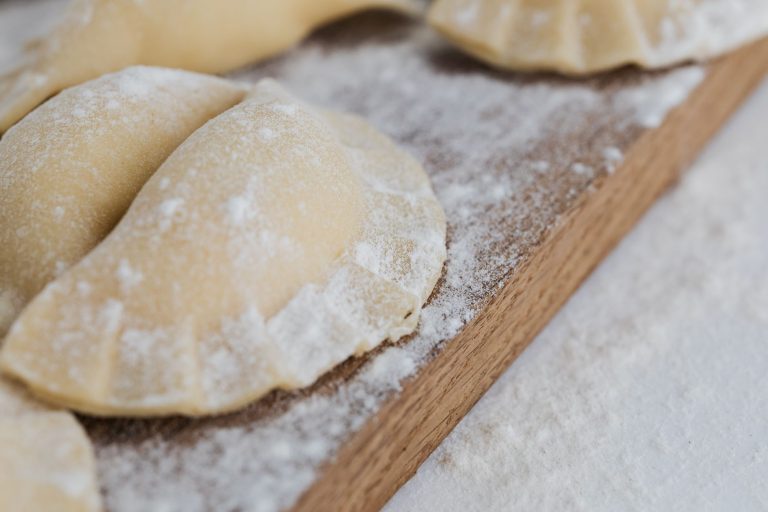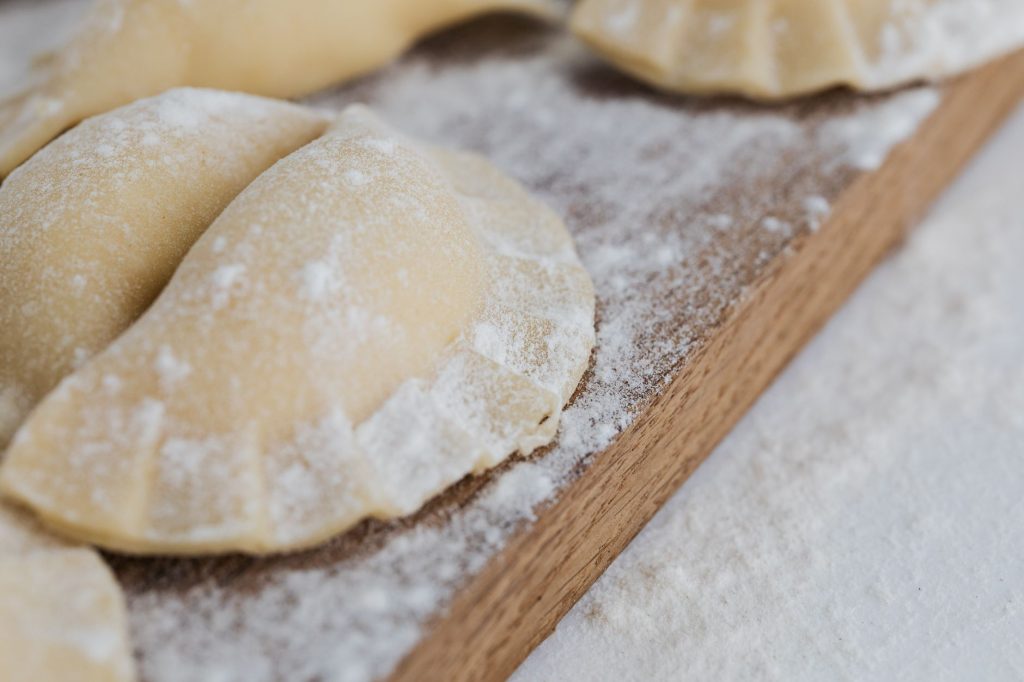
Mary Gradowski will tell you she’s not the reason people line up outside St. Casimir’s on a Saturday morning in November. She’ll say it’s the dough, or the potato-cheese filling, or just habit. She’s wrong, and everyone who’s been coming for the past two decades knows it.
St. Casimir’s Polish Hall sits on a residential block in Bradford’s east side, the kind of building that doesn’t announce itself — a plain brick parish hall with a parking lot that fills up faster than you’d expect. The pierogi sale happens a few times a year, most notably in the fall, organized by the parish’s women’s guild. Mary has been part of that guild since before most of the current volunteers were born. She shows up early. She stays late. She crimps edges the way her mother showed her, which is different from how the woman two seats down does it, and she is at peace with that difference.
I first went because a coworker mentioned it in passing, the way people mention things they assume everyone already knows. I didn’t. I showed up at 9:15 on a gray Saturday thinking I’d grab a dozen and leave in ten minutes. There was already a line. Not a long one, but a steady one — retirees with coolers, a young couple splitting a cup of coffee, a guy in a Carhartt jacket who clearly knew exactly how many trays he was taking home.
Inside, the hall smells like butter and boiled dough and coffee kept warm too long, which sounds like a complaint but isn’t. Folding tables. Fluorescent lights. Volunteers in aprons moving with the focused efficiency of people who have done this many, many times. You order at one end, pay, pick up at the other. The pierogi come in white cardboard boxes, still warm if the timing works out. Potato-cheese is the standard. Sauerkraut-mushroom shows up depending on the sale. Prune occasionally, for the people who’ve been requesting it for thirty years and finally got their way.
A dozen runs you somewhere in the $8–$10 range, give or take. Most people buy three or four dozen and freeze them. Mary will tell you to pan-fry them in butter with onions when you get home, not boil them again. She says this with the mild authority of someone who has watched people ruin perfectly good pierogi.
What I keep coming back to isn’t the food exactly — though the food is genuinely good, the dough thinner than the grocery-store kind, the filling dense and savory without being heavy. It’s the fact that this sale exists because a group of women decided it should, have kept deciding it should for decades, and have passed the work down and sideways and across kitchen tables until it became a small institution. Mary doesn’t think of herself as preserving anything. She just shows up.
Check the St. Casimir’s parish calendar or call ahead — sale dates shift, and they do sell out. Cash is preferred. Bring a cooler if you’re buying in quantity, which you should be.