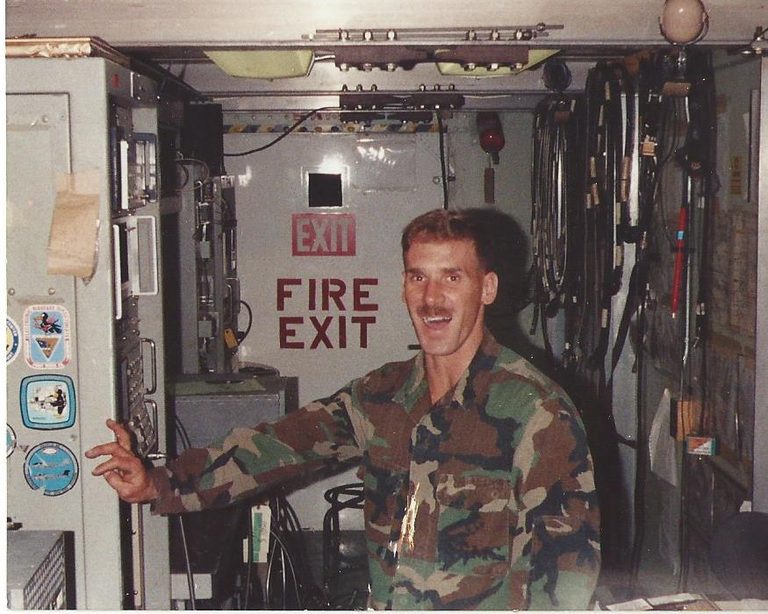
A Brooklyn kid with no particular direction walked into a recruiter’s office on a whim and the institution saw potential he had not yet seen in himself. Growing up in Brooklyn in a working-class Italian household, the author was a reasonably smart kid, but college was not a realistic option financially.
Joining the Marine Corps
The author chose the Marines because they had the reputation of being the hardest to get through. At 17, he signed a Delayed Entry Program contract and shipped to Parris Island, South Carolina a few weeks after graduation. Boot camp answered his question – yes, he could do it.
What happened next, he did not expect. The Marine Corps ran him through their classification process and apparently saw something in the math aptitude scores, because he was sent to NAS Memphis in Millington, TN for aviation electronics training. The technical curriculum absorbed him completely, and he found his element.
A New Career Path
His first duty station was Military Corp Air Station (MCAS) Iwakuni, Japan, with H&MS-12. He extended his one-year tour to two and later deployed to Kuwait and Bahrain with a combat replacement company. After 12 years of service, he separated as a Sergeant in August 1992 during the post-Cold War drawdown.
The greatest challenge of his service was not a single moment, but the sustained discipline of performing precise, consequential technical work on deployed aircraft, often in austere conditions, where the margin for error was effectively zero. The Marine Corps gave him a framework for approaching complex problems methodically, which transferred directly into his post-military career.
He now works on building optical and network infrastructure to remote Alaskan villages, communities that had no meaningful telecommunications before fiber arrived. To young Americans, he says: pay attention to where the future is actually going, not where it appears comfortable today. The technical fields, mathematics, engineering, computer science, electronics, are where civilization’s infrastructure will be designed, built, and operated for the next several generations.
Original reporting: Must Read Alaska (Anchorage) — read the source article.