Pull off Route 59 east of Bradford, follow the signs into the Kinzua Bridge State Park access road, and within a few minutes you’re standing in front of a low-slung building that most people drive past on their way to the collapsed bridge. That’s a mistake. The W. C. Collins Interpretive Center — run by the Pennsylvania Bureau of State Parks and the U.S. Forest Service jointly — is a genuinely well-done introduction to the geology, ecology, and human history of this corner of the Allegheny Plateau, and it costs you nothing to walk in.
The center opened in the mid-2000s and was designed around the 2003 tornado that took down eleven of the original sixteen Kinzua Bridge towers. What could have been a disaster story is handled carefully here. Interpretive panels walk you through the physics of what happened — wind speeds, the structural vulnerabilities of wrought iron, why some towers held and others didn’t — without turning it into spectacle. There’s a short film that runs on loop, maybe twelve minutes, that’s worth watching before you head out to the actual bridge remnants. It reframes what you’re about to see.
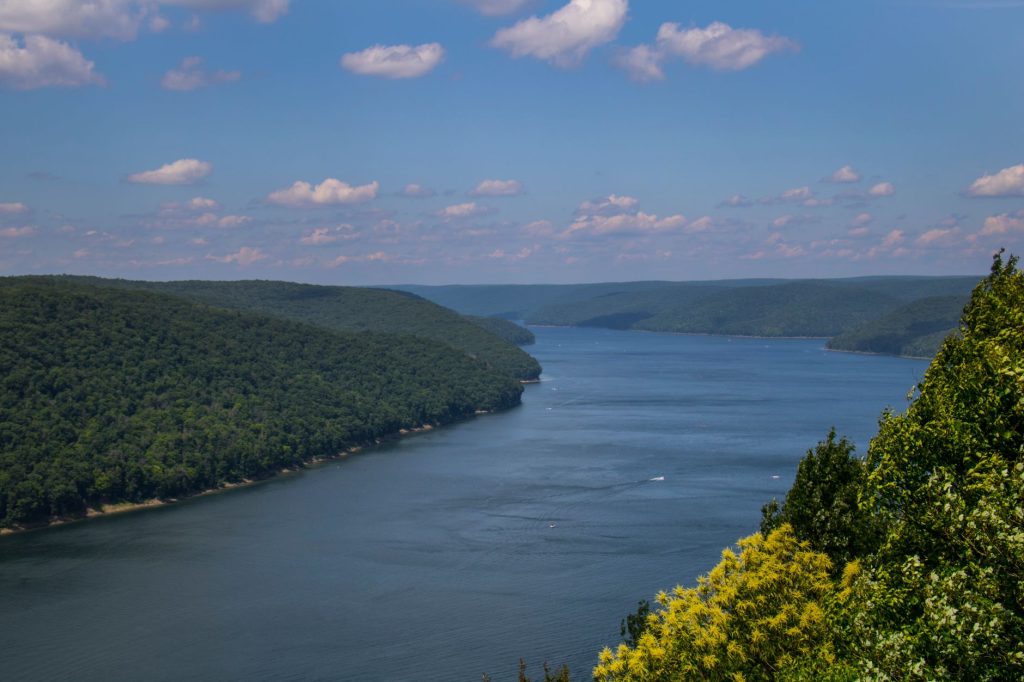
Beyond the tornado exhibit, the center gives real attention to the broader forest. There are displays on the Seneca Nation’s historic connection to this land, the timber and oil booms that reshaped the region in the nineteenth century, and the wildlife corridors that still run through the Allegheny today. The taxidermy mounts are good quality — a black bear, a fisher, several raptors — and the topographic relief map of the reservoir and surrounding ridgelines is the kind of thing you spend more time with than you expect to.
Staff rangers cycle through regularly and are worth talking to. If you ask about trail conditions, current fishing on the reservoir, or what the bridge looks like after a wet spring, you’ll get a straight answer. They know the park the way people know a place they spend forty hours a week in, not from a brochure.
Practically speaking: the center is open from late spring through fall, generally Thursday through Monday, though hours shift by season and it’s worth checking the Pennsylvania DCNR website before you make the drive. Admission is free. The parking area fills early on summer weekends — get there before 10 a.m. if you want a spot without circling. The walk from the center to the bridge overlook and the remaining towers is under a mile on a paved path, mostly flat, and genuinely impressive at the end. Kids handle it fine; so does anyone who isn’t looking for a strenuous hike.
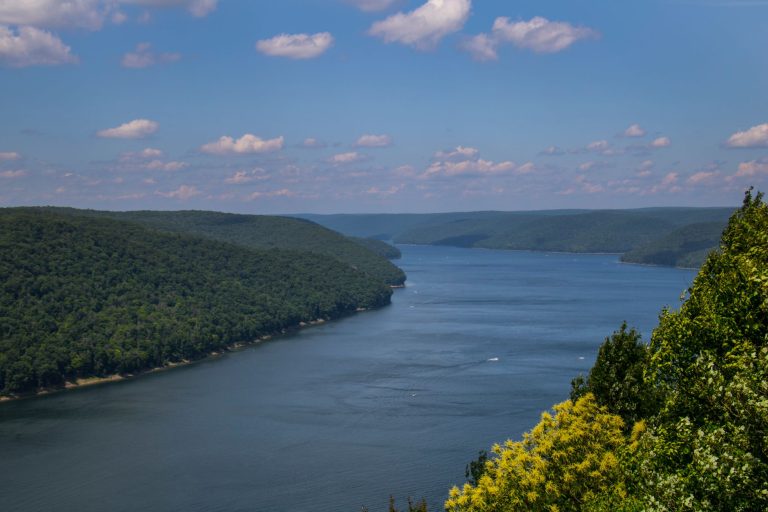
Bradford is about sixteen miles west on Route 59. If you’re making a day of it, the drive alone — along the southern edge of the reservoir — is worth something. But the interpretive center is the part that actually prepares you for what you’re looking at once you get there. Skipping it means you’re just staring at bent steel without much context. With it, you understand why the locals still talk about that storm twenty years later.