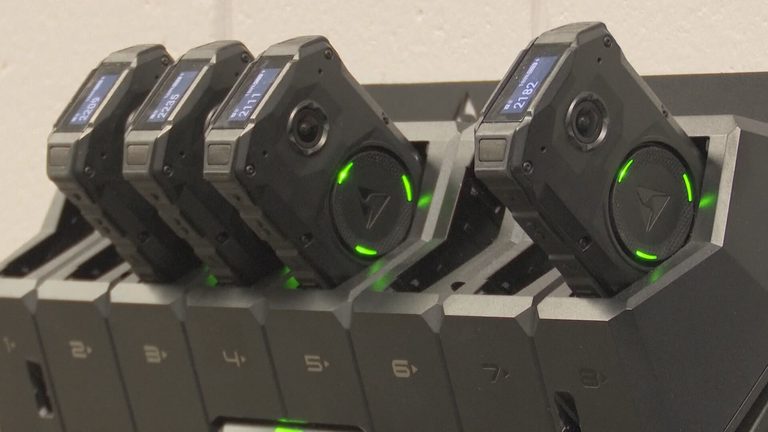
Madison leaders gathered Tuesday evening to fine‑tune two draft policies that will guide the city’s expanded body‑camera program slated for early 2027. The workgroup, composed of alderpersons, police officials and union representatives, spent nearly three hours reviewing how, when, and where officers should record, as well as the timeline for releasing video after critical incidents.
Recording on school grounds
The most contentious issue centered on a proposal to generally prohibit body‑camera recording on elementary, middle and high school property, with limited exceptions for imminent threats to life or serious injury. Sgt. Jason Baumgart of the Madison Professional Police Officers Association warned that such a blanket ban could leave important interactions undocumented. “I think we can record a lot more and redact it on the back end,” Baumgart said. “If we’re introducing this technology and this SOP, I would personally rely more heavily on let’s record more and redact more on the back end so there’s no questions about why wasn’t your camera on.”
District 13 Alder Tag Evers supported allowing recordings in situations that could quickly escalate, while Madison Police Assistant Chief Matt Tye raised concerns about student privacy and the lack of input from the school district. “We haven’t talked to the school district. They have certain privacy rights,” Tye said. “I don’t know how that changes if they request us to turn off the cameras and they don’t want the cameras on.”
The group also debated whether recording rules should differ among elementary, middle and high schools, but no consensus emerged.
When officers must record
Under the draft policy, officers would generally record traffic stops, arrests and interviews. Exceptions would permit deactivation when victims or witnesses request it as a condition of cooperating. Officer Jordan Strachota asked how such exceptions would work in rapidly changing encounters. “Things are always evolving rapidly in our encounters,” he said. “And just because someone’s cooperative one minute doesn’t mean that they’re going to be cooperative the next minute.”
The discussion also covered supervisory oversight, officer access to recordings, and how to balance transparency with privacy.
Video‑release timeline
A separate proposal set out rules for releasing footage after officer‑involved deaths and other critical incidents. The policy would apply not only to body‑camera video but also to dash‑cam recordings and footage supplied by the public. One option called for releasing video within 15 days; alternatives of 60 and 90 days were also considered.
District 19 Alder John Guequierre, who chairs the workgroup, noted that the Dane County district attorney and the Wisconsin Department of Justice’s Division of Criminal Investigation have not committed to the 15‑day timeline. “They’re just not prepared to say hey, go ahead with your 15 days,” Guequierre said. “We’ll probably do it case by case. We’ll set a goal in those kinds of cases where there’s a police‑involved death and try to make that a common thing.” The release deadline remains unresolved.
Next steps
The city has already approved funding for the expanded body‑camera rollout, which will begin in early 2027. Some specialized Madison police units have used the technology for years. Workgroup members approved several amendments Tuesday, but other proposals require further discussion. The group will reconvene on Dec. 1, with plans to present the policies to the Common Council on Dec. 8. A final council vote could occur on Jan. 12, 2027, though the timeline is tentative.
These deliberations reflect Madison’s effort to balance public‑safety transparency with the privacy rights of students and community members, ensuring that the upcoming body‑camera program serves both law‑enforcement effectiveness and constitutional protections.
Original reporting: NBC15 WMTV (Gray) – local — read the source article.