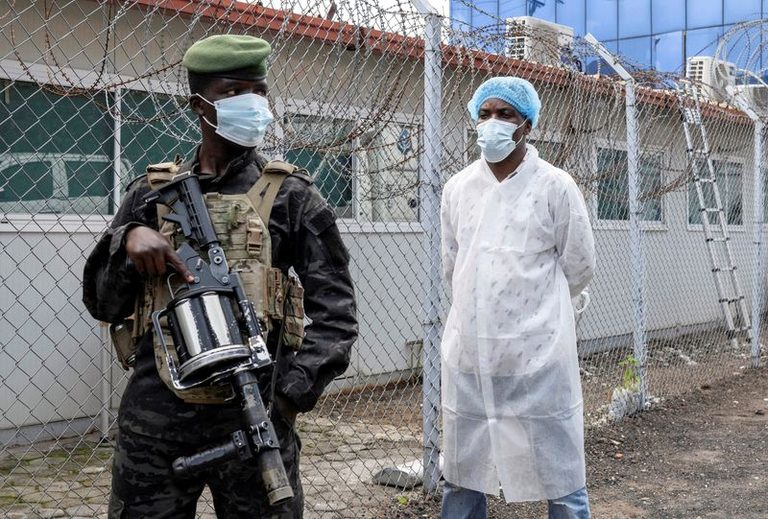
The AFC/M23 rebel alliance, which controls large portions of North and South Kivu provinces in the Democratic Republic of Congo, issued a new set of movement restrictions aimed at slowing the spread of Ebola. The measures, announced late Wednesday, will be in effect for one month starting Saturday.
Travel limits on key routes
All shared taxis operating on the main road between Goma and Kirumba will be suspended for the duration of the restriction. In addition, passenger pirogue boats on certain routes across Lake Edward will no longer be allowed to carry travelers. The rebels said that taxi‑buses may still run on the Goma‑Kirumba corridor, but only after undergoing health and safety checks. Trucks transporting goods will also be permitted to continue operating under similar controls.
Why the new rules?
The decision follows the confirmation that two individuals who had traveled from the government‑held town of Lubero tested positive for Ebola after arriving in a village under M23 control. A member of the rebel‑run response team told Reuters that the new restrictions are intended to prevent further transmission from government‑held zones into rebel‑controlled areas.
Rebels’ health response amid ongoing conflict
Since the outbreak began earlier this year, the M23 rebels have sought to demonstrate their capacity to manage public‑health emergencies independently of the central government in Kinshasa. In June, they declared the territories they control to be Ebola‑free, a claim that health officials continue to monitor closely. The rebels’ approach includes setting up their own treatment and surveillance facilities, separate from the national health system.
Health officials describe the current outbreak as the fastest‑spreading Ebola event on record, with confirmed cases now exceeding 5,000 according to recent government data. The dual challenge of a rapidly moving disease and persistent armed conflict makes containment efforts especially difficult.
Broader context of the conflict
The M23 alliance, backed by Rwanda according to United Nations and Western governments—a claim Kigali denies—captured the major eastern cities of Goma and Bukavu during its early 2025 advance. Their control of significant swaths of Kivu provinces has created a fragmented security environment, complicating coordinated public‑health responses.
International observers note that the rebels’ use of the Ebola crisis to showcase administrative capacity is part of a broader strategy to legitimize their rule in eastern Congo. While the United Nations continues to call for a unified response to the outbreak, the reality on the ground remains a patchwork of parallel health systems.
What this means for residents
For civilians living along the Goma‑Kirumba corridor and those who rely on lake transport, the restrictions will limit mobility and may affect trade and daily commuting. Authorities on both sides of the front line have urged the public to comply with health checks and to seek medical attention promptly if symptoms appear.
Humanitarian groups warn that reduced movement could also hinder the delivery of aid, but they stress that controlling the spread of Ebola must remain a priority. The situation underscores the intertwined nature of health, security, and governance in a region already strained by decades of conflict.
Original reporting: Appleton, WI News Feed (HLL/CB) — read the source article.