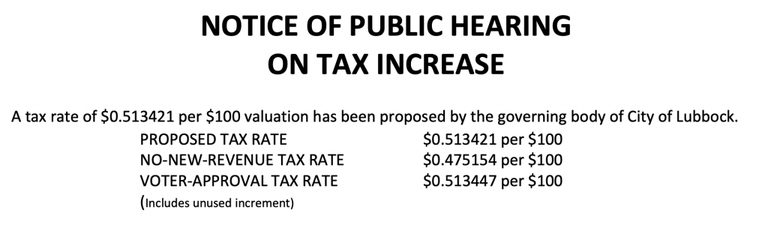
Lubbock officials are set to vote on a new property‑tax rate for the 2026 fiscal year. The proposed rate of $0.513421 per $100 of assessed value sits just below the state‑mandated voter‑approval ceiling of $0.513447, meaning the city would not be required to hold a public election on the increase.
What the numbers mean for families
According to the city’s notice, the average homestead would see its annual levy rise from $1,060.55 to $1,177.88 – an additional $117.33, or more than an 11% jump. Across all properties, the total levy would grow by $10,774,962, pushing the city’s property‑tax collection to roughly $135.7 million, with over $3.1 million coming from newly‑added properties.
How the rate compares
The proposed figure is above the “no‑new‑revenue” baseline of $0.475154, which would keep collections at roughly the same level as last year. It also exceeds the 2025 no‑new‑revenue rate of $0.461938. While the rate is lower than the city’s 2025 adopted rate of $0.472191, it still represents a tax increase under state law because it is above the no‑new‑revenue line.
Council debate and next steps
During the recent planning session, Councilman David Bruegel voted against the proposal, arguing for a rate below the no‑new‑revenue threshold. The final vote is scheduled for the September 8 agenda. If the council adopts the rate, Lubbock residents will see the higher levy without a voter‑approval election. If the council chooses a lower rate, the city would stay within the no‑new‑revenue limit and avoid the increase.
Why it matters to taxpayers
Local families are already feeling pressure from rising grocery, insurance and other essential costs. An additional $100‑plus on the average household could strain budgets for car repairs, medical bills or savings. Community groups such as Texans for Fiscal Responsibility are urging residents to voice their concerns before the council’s final decision.
For more details on the proposed rate and how it may affect your property tax bill, review the city’s fiscal note or contact your council member.
Original reporting: Texans for Fiscal Responsibility — read the source article.