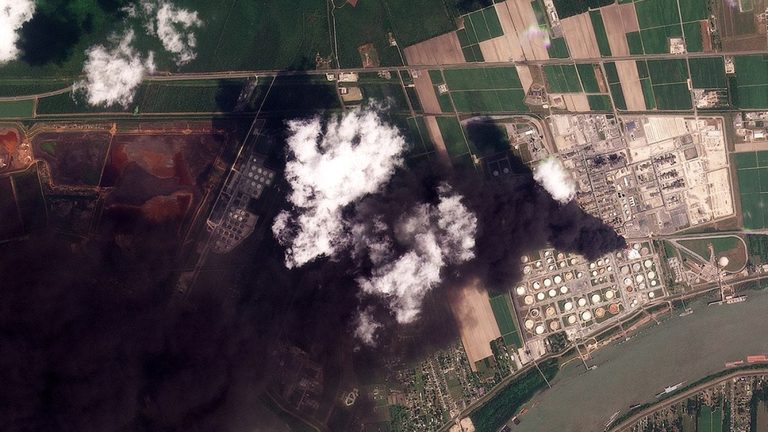
Kimbrelle Kyereh lives near massive chemical storage tanks in St. Rose, Louisiana, where oily fumes often cause headaches, nausea, and insomnia. In 2023, she began collecting air samples, but soon stopped after Louisiana passed an industry-backed law restricting the use of such data.
Toxic Air Pollution in Louisiana
A Floodlight analysis found that Louisiana’s public air monitors are often located miles from major industrial polluters and fail to test for some of the most dangerous chemicals. The state’s top 25 industrial air polluters were identified using emissions data, and the distance to the nearest public air monitoring station was calculated.
Industry groups have fought proposals for better monitoring around manufacturing plants and helped draft a 2024 law restricting community air monitoring. Lawmakers in other states, such as Kentucky, Ohio, and West Virginia, have introduced similar legislation.
Lack of Air Monitoring Data
The Louisiana Department of Environmental Quality operates 35 permanent air monitoring stations, but the network is not designed to monitor pollution in fenceline communities. The agency has two mobile monitoring vans, but they do not continuously monitor toxic air pollutants.
Community advocates and environmental researchers have pressed for expanded monitoring, especially in predominantly Black communities near industrial facilities. The lack of air monitoring data serves as a shield for polluters, and families living near polluting facilities bear the burden of uncertainty.
Original reporting: El Paso News (HLL/CB) — read the source article.