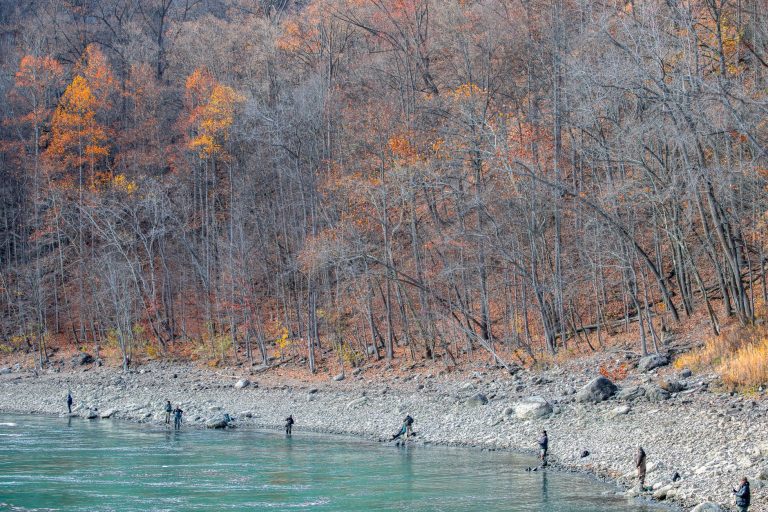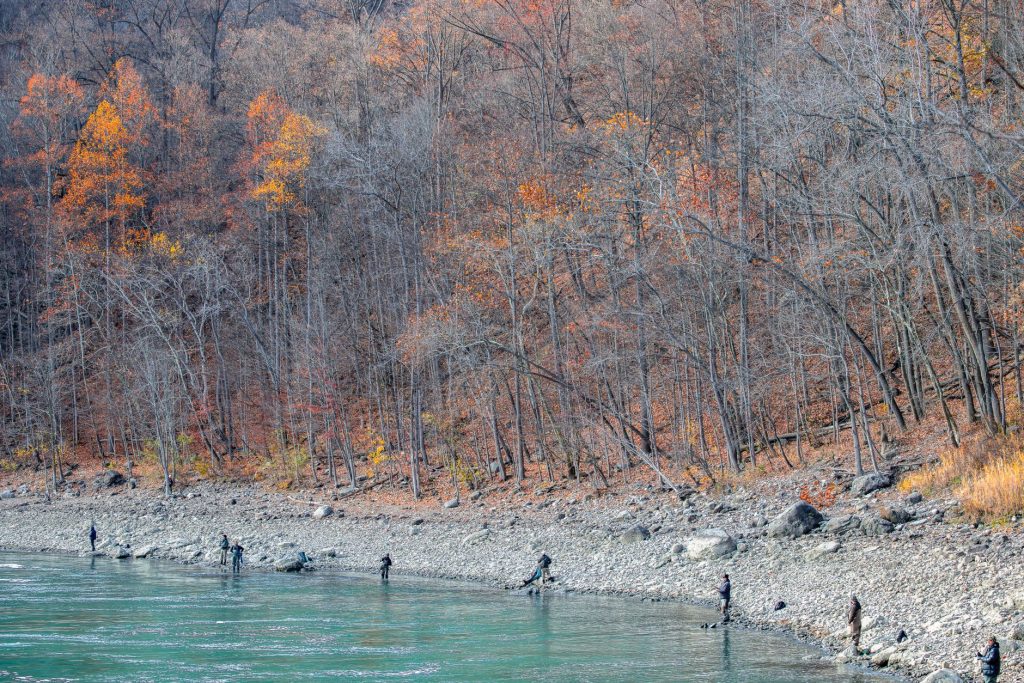
Lou Cardillo will tell you, without particular pride or nostalgia, that the stretch of Tuna Creek running through the valley below Bradford is as good a piece of trout water as you’ll find in northwestern Pennsylvania. He’ll also tell you that most people driving Route 346 have no idea it’s there, which suits him fine.
Lou is seventy-one years old, retired from the furniture business on Congress Street, and has been wading Tuna Creek since he was about nineteen. He fishes it in rubber-soled waders that have been patched twice. He uses a seven-foot fiberglass rod that he bought used in 1991 and sees no reason to replace. He catches fish.
The public access points along the lower Tuna Valley corridor — most notably the pull-offs along Tuna Valley Road south of Bradford proper, roughly between the Route 219 interchange and the Corydon area — give everyday anglers a legitimate shot at wild brown trout in moving water that doesn’t require a club membership or a guided float. This isn’t stocked-and-crowded water. The creek runs cold from limestone springs, and the fish hold through the heat of summer in ways that put a lot of more famous streams to shame.
Lou prefers early morning, mid-week, April through June. He’s out before seven, in the water by seven-thirty, usually fishing until eleven or noon when the sun gets high and the fish go sulky. His flies of choice are embarrassingly simple: a Hare’s Ear nymph, an Elk Hair Caddis, and something pheasant-tail when nothing else is working. He doesn’t tie his own. “Life is short,” he says.
Access is free, though you’ll need a Pennsylvania fishing license, which runs around $24 for residents and a bit more for non-residents — available at Walmart on Elm Street or online through the Fish and Boat Commission. Parking is informal; a few pull-offs hold two or three vehicles comfortably. On a weekday morning in May, Lou says he rarely sees more than one other person working the same stretch.
What makes the valley water worth seeking out isn’t just the fish — it’s the whole setup. The creek bends through a narrow corridor of hemlocks and second-growth hardwoods, the banks are soft underfoot, and the gradient is gentle enough that you can wade upstream for two hours without feeling like you’ve run a half-marathon. Kingfishers work the same water you do. The occasional great blue heron will stand in a pool ahead and stare at you with open contempt before finally lifting off.
Lou’s advice for first-timers: park at the lower pull-off, walk upstream fifty yards before you get in the water, and don’t start fishing the first pool you see. Someone else already worked it. Take your time reading the current. The fish sit in the seams, not the slicks.
He’s been saying that for thirty years to anyone who asks. Some of them listen. Most of them go straight for the first pool.
The ones who listen tend to come back.