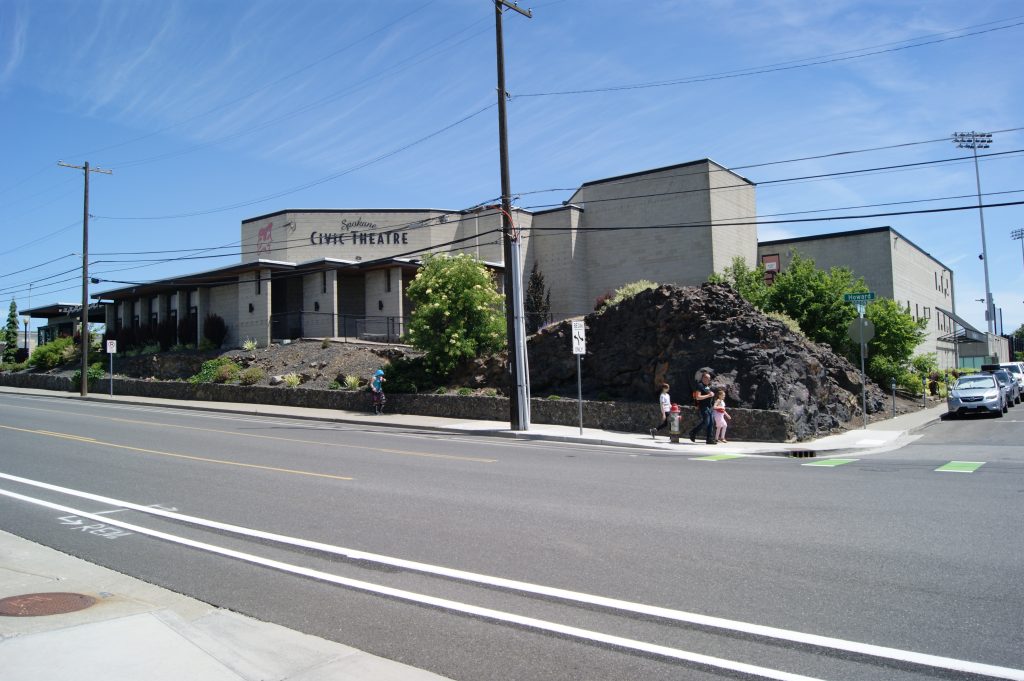
On a Thursday evening in late October, the parking lot off Monroe Street fills up faster than you’d expect for a city where most people insist they don’t go downtown after dark. Inside the Spokane Civic Theatre, volunteers are seating people, programs are being folded and refolded out of nervous habit, and somebody’s grandmother is telling her husband exactly what she thinks the plot is going to be. She’s probably right. This is community theater. That’s part of the charm.
What is the Spokane Civic Theatre, exactly? It’s the longest continuously operating community theater in the Pacific Northwest — founded in 1947, currently housed in a renovated space on Monroe just north of the downtown core. It runs a full mainstage season of five or six productions per year, plus a second smaller stage called the Firth J. Chew Studio Theatre, where the weirder and more ambitious stuff tends to land. If the mainstage is doing a Rodgers and Hammerstein revival, the Studio is probably doing something that makes your aunt quietly uncomfortable. Both are worth your time.
The company is genuinely local — no Equity contracts, no imported leads. The people on stage are your neighbors, your coworkers, your kid’s former drama teacher. That sounds like a caveat, but it isn’t. The productions here have a texture that professional touring shows lose: actual stakes, visible effort, and occasional moments of real surprise. The direction is often tight, the technical production is better than you’d expect given the budget, and the ensemble work tends to outperform any single standout performance. Which is how community theater, at its best, is supposed to work.
Tickets run between $20 and $40 for most shows, which puts a night out — two tickets, a drink at intermission — somewhere in the $60 to $90 range. That’s a reasonable price for two hours of entertainment that actually happened in your city, made by people who live in it. Student and senior discounts are available, and the box office will work with you if you call ahead.
The Civic also runs youth programs and summer camps that have quietly trained a generation of Spokane performers who went on to do serious work elsewhere. None of that is advertised loudly. You’d have to ask somebody who’s been coming for decades, which you can do easily, because those people are always in the lobby.
The lobby itself is worth a mention. It’s low-ceilinged and functional, not grand — lobby in the sense of a room where people stand — and the pre-show energy there has a particular quality you don’t get at the Bing or the Fox. It’s neighborly. People know each other. Conversations about the last show bleed into the next one. If you arrive fifteen minutes early and stand near the bar, you’ll learn more about the last twenty years of Spokane cultural life than you would from any official source.
Season subscriptions exist and are genuinely worth considering if you live here. Single tickets go on sale well in advance through the website. Parking on the street is usually available north of the building on a weeknight; weekends require more patience or a short walk.
The Civic isn’t trying to compete with anything. It has been doing what it does for longer than most of the buildings around it have existed. Go once and you’ll understand why the lot fills up faster than you’d expect.