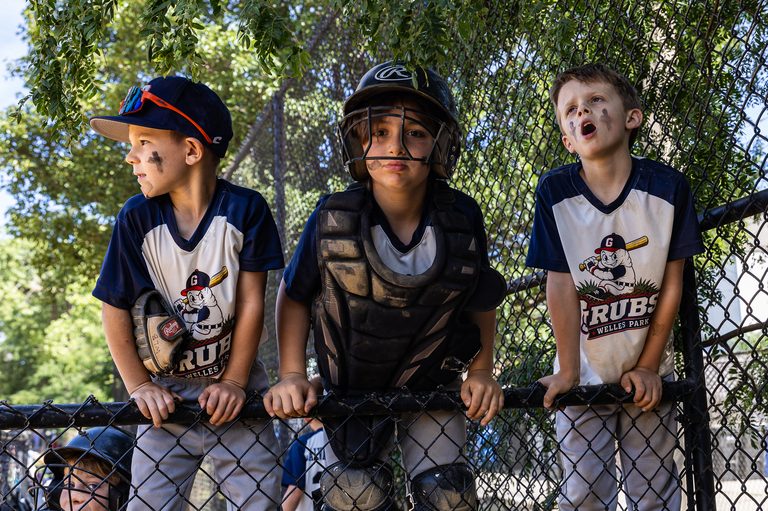
Lincoln Square — After a surge of grub larvae turned the Welles Park baseball field into a patch of bare soil last spring, a local youth baseball team chose to embrace the insects rather than fight them. The 7‑ and 8‑year‑old boys renamed themselves the Welles Park Grubs and debuted new jerseys featuring a grub silhouette.
From Field Closure to Team Identity
Heavy rains in March encouraged a second wave of white‑gray larvae, the same pests that first appeared in 2021 and destroyed roughly one‑third of the park’s 15 acres. The infestation forced the Chicago Park District to close Welles Park and nearby Winnemac Park for up to ten months while crews treated the grounds, reseeded turf, and repaired damage.
“What a tremendous thing for a bug to be so significant that it affected the baseball program, but also other programs as well,” said Claire DiMattina, a team mom who designed the new jerseys. “Now the Grubs are our mascot. It’s sweet and kind of funny.”
Logistical Challenges for Families
With the fields closed, local teams scrambled for alternate practice sites. Charlotte Vantine, an 11‑year‑old player on a different Lincoln Square team, recalled having to relocate multiple times during the spring season. “The grubs were getting too much into our space, so it became kind of hard,” she said.
Parents with children on several teams faced a transportation nightmare. Coach Brian Lafebre, whose three children play baseball and softball, explained that driving across the city for games became difficult when nearby parks were shut down. Most Lincoln Square families live close to Welles Park, making the loss of that venue especially disruptive.
Community Humor and Resilience
Jason Vantine, father of Charlotte and a player on the Grubs, noted that the recurring closures have become a running joke among members of the Welles Park Parents Association (WPPA). “We play WPPA, but we play anywhere but Welles Park,” he laughed.
Even during the COVID‑19 pandemic, when in‑person activities were limited, the field’s shutdown did not go unnoticed. Vantine recalled being told the grub problem had been resolved, only to see the insects return later in the year. “We’ve been fed information,” he said. “It feels like it came back again because it wasn’t fully dealt with.”
Park District Response
The Chicago Park District hired a contractor, Christy Webber Landscapes, under a two‑year $6 million contract to treat the parks. Initial treatment in late spring used the pesticide Acelepryn, followed by the insecticide Arena in June. District spokesperson Irene Tostado said the district will spray Arena again this month and reapply Acelepryn next spring, with another round of Arena planned for next summer and early fall.
State entomologist Christopher Dietrich warned that the active ingredients in these chemicals only work when insects directly contact or ingest them. Deep‑buried larvae, protected by cocoons during their pupal stage, are harder for the chemicals to reach.
Local Officials Weigh In
Chicago Alderman Matt Martin (47th Ward) announced plans to meet with district officials to discuss ongoing efforts. In July, he expressed frustration that the grub issue persisted despite assurances of resolution.
Turning a Challenge into Pride
Despite the setbacks, the Welles Park Grubs continue to play and take pride in their new identity. “We thrive in various conditions,” Vantine said, underscoring the team’s resilient spirit.
The story of the Grubs highlights how a community can turn an environmental challenge into a unifying symbol, keeping youth sports alive while the park district works toward a lasting solution.
Original reporting: Block Club Chicago — read the source article.