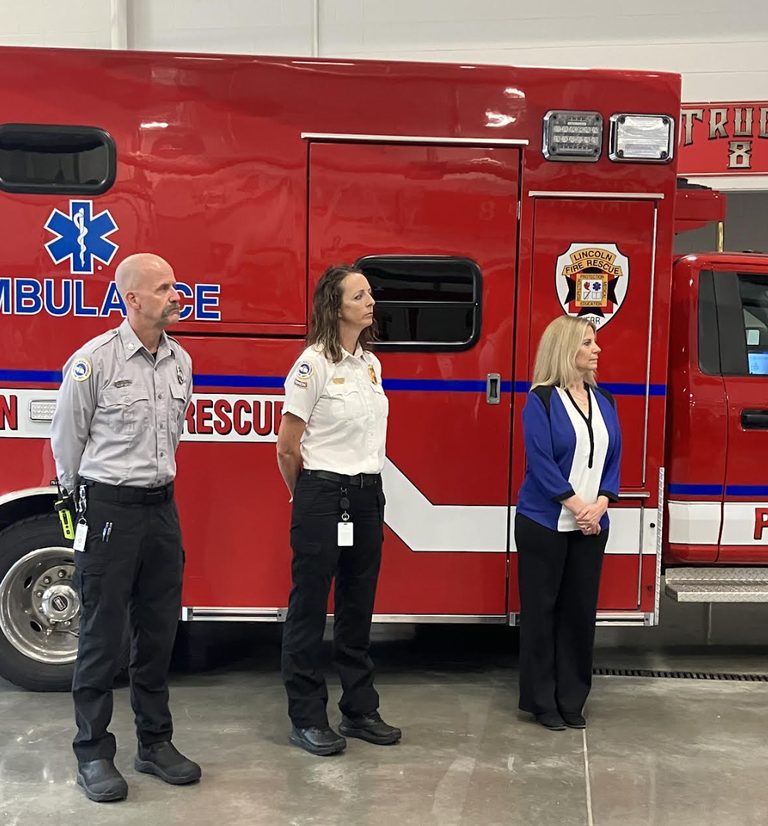
Lincoln, Neb. – In a move that strengthens emergency medical response for the city and surrounding communities, Lincoln Fire & Rescue (LFR) and the Nebraska Community Blood Bank (NCBB) announced a partnership to provide pre‑hospital blood transfusions. The program, unveiled on Sept. 29, equips trained emergency medical services (EMS) personnel with blood products so they can begin life‑saving transfusions at the scene of severe injuries or en route to a hospital.
How the program works
Under the new protocol, EMS providers who have completed specialized training will carry packed red blood cells in their response vehicles. When a patient suffers significant blood loss – such as from a motor‑vehicle collision, major trauma, or violent incident – the provider can start a transfusion immediately, rather than waiting for the patient to arrive at an emergency department.
“This program represents an important step forward in emergency care and our ability to get lifesaving blood to patients when they need it most,” said Cheryl Warholoski, executive director of NCBB. “We’re proud to partner with Lincoln Fire & Rescue to bring this capability to our community and help ensure critically injured patients can begin receiving blood as quickly as possible.”
Benefits for the community
Early transfusion has been shown to improve survival rates for trauma patients by reducing the time to restore circulating volume and oxygen‑carrying capacity. By delivering blood on the scene, LFR aims to reduce preventable deaths and improve outcomes for victims of severe bleeding.
Mayor [Insert Mayor’s Name] praised the collaboration, noting that it reflects Lincoln’s commitment to innovative public‑safety solutions rooted in strong community partnerships. “Our fire department and our local health partners are working together to protect the lives of Nebraskans,” the mayor said.
Training and safety measures
All participating EMS providers have undergone rigorous instruction on blood handling, storage, and administration. The blood products are stored in temperature‑controlled coolers and are regularly inspected to meet safety standards set by the Nebraska Department of Health and Human Services.
NCBB will continue to supply the blood, ensuring a reliable inventory of type‑O negative units, which are universally compatible for emergency use. The partnership also includes a tracking system that logs each transfusion, allowing for quality‑control reviews and continuous improvement of the protocol.
Looking ahead
LFR and NCBB plan to evaluate the program’s impact over the coming months, with the goal of expanding the model to neighboring fire districts and EMS agencies throughout the state. If successful, the initiative could serve as a template for other communities seeking to enhance trauma care.
Residents who wish to support the effort can donate blood through NCBB’s regular drives or volunteer with local emergency‑services organizations. The collaboration underscores how faith‑based values, family safety, and individual liberty converge when a community works together to protect its most vulnerable members.
Original reporting: KLKN-TV – News, Weather and Sports for Lincoln, Nebraska — read the source article.