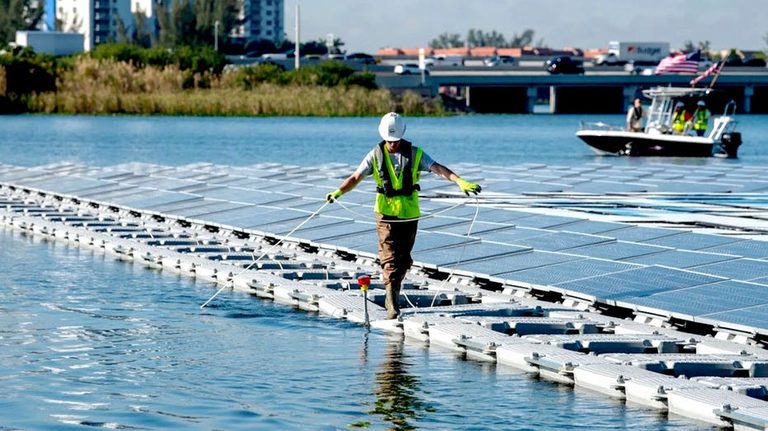
Lima, Ohio, has finished installing a 2‑megawatt floating solar farm on the Twin Lakes Reservoir, the city’s primary drinking‑water source. The project, completed on Aug. 12, features 3,120 solar panels spread across roughly 3.6 acres of water.
How the system works
Instead of mounting panels on ground‑based racks, engineers use Ciel & Terre’s Hydrelio floating platform, anchored to the reservoir banks and bottom. The bifacial panels capture sunlight on both sides, and electricity is routed through eight on‑shore inverters to power the adjacent water‑treatment plant, which consumes more electricity than any other city facility.
Financial impact
The city projects the floating array will save nearly $10 million in electricity costs over its lifetime, with first‑year savings estimated at about $200,000. Construction cost about $5.3 million, offset by a $2.4 million Department of Energy grant and nearly $900,000 in federal tax credits, covering roughly half of the upfront expense.
Benefits for land‑constrained communities
Because the panels sit on water, they avoid the land costs and competing uses associated with traditional solar farms. A comparable land‑based system would require at least 10 acres, whereas Lima’s floating array occupies about four acres. The proximity to the water‑treatment plant also reduces transmission losses.
Potential for wider adoption
The National Renewable Energy Laboratory estimates that U.S. reservoirs could technically support 861 to 1,042 gigawatts of floating solar capacity. While not every reservoir is suitable, the technical potential underscores why more cities are exploring the technology. Ohio already hosts several projects, including a 1.5‑megawatt array in Delaware and a 6‑megawatt system slated for Monroeville by the end of 2026.
What residents should watch
Although the projected savings are substantial, the city has not yet detailed how the cost reductions will be passed to ratepayers. Possible uses include offsetting other municipal expenses, funding infrastructure upgrades, or mitigating future rate increases.
Floating solar offers municipalities a way to reduce utility expenses without sacrificing valuable land, and Lima’s experience provides a template for other communities seeking similar savings.
Original reporting: Fox News (HLL/CB) — read the source article.