As the war between Israel and Iran-backed Hezbollah has subsided, families are returning to their homes in southern Lebanon. The coastal city of Tyre is seeing a resurgence of life, with children playing on the beach and families gathering under parasols.
Rebuilding and Recovery
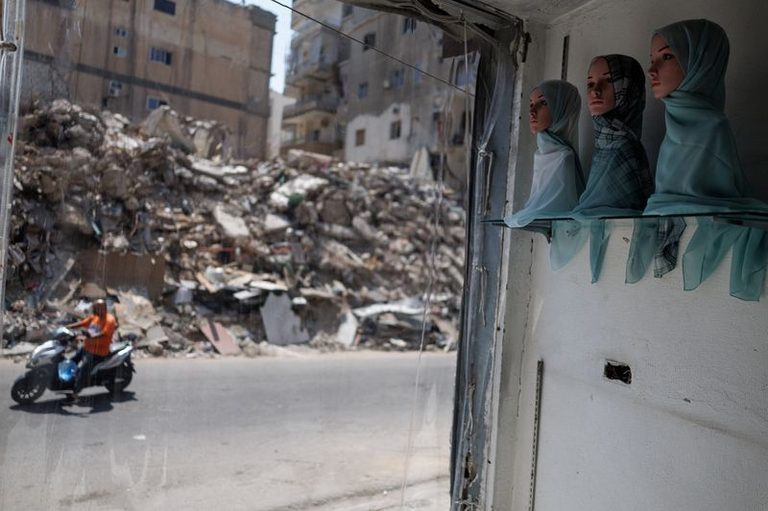
However, the threat of conflict still looms, and many are adapting to harsh new realities. The Lebanese government reports that at least 3,783 people have been killed in the conflict, and 600,000 more are internally displaced. Many families whose homes were destroyed are still living in schools or rented homes.
Returnees are cleaning debris from damaged homes, reopening businesses, and trying to rebuild their routines. Some, like Ali Skaiky, are cautiously optimistic, saying, “We still hear strikes and fighting at night, but it’s far away. There’s destruction beyond imagination, but we hope everything will stay calm.”
Uncertainty and Fear
Others, like Fadlallah Qassim, have returned to find their homes severely damaged. Qassim’s house was hit, and he has been working to repair it, saying, “We returned to find the whole house caved in with rubble, and all the furniture ruined.”
In the nearby village of Srifa, Suzan Fakih described the difficulty of returning to a place that no longer feels like home. “The moment you arrive, it doesn’t feel like your village anymore,” she said. “Everything is black and grey. It hurts your soul. You look around and think, ‘This can’t be the village I’ve lived in all my life.'”
As the situation remains uncertain, many are preparing for the possibility of having to flee again. Mohammad Sweid, a resident of the Bekaa Valley town of Sohmor, still pays rent for the house he and his family fled to during the war, keeping it as a backup home.
Original reporting: Appleton, WI News Feed (HLL/CB) — read the source article.