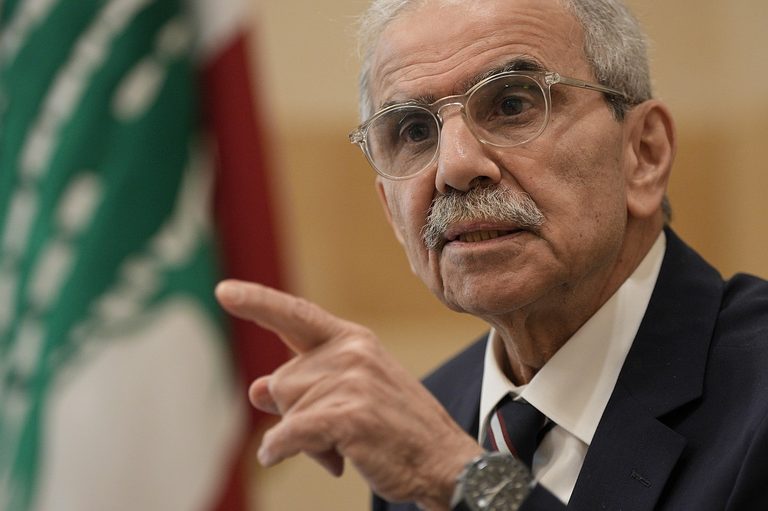
Beirut – In an exclusive interview with the Associated Press at the government palace, Prime Minister Nawaf Salam announced that Lebanon is working on a proposal that could allow the United Nations Interim Force in Lebanon (UNIFIL) to continue certain missions after its nearly 50‑year mandate ends on Dec. 31.
Proposed Extension and French Initiative
Salam said France is preparing to bring a resolution before the U.N. Security Council that would let UNIFIL maintain key tasks such as mine clearance, escorting humanitarian convoys, and monitoring violations during a drawdown period. He added that U.S. officials have indicated Washington could be “open to considering” a similar arrangement.
Mandate Expiration and Withdrawal Timeline
The Security Council voted last year to terminate UNIFIL’s mandate at the end of 2026, responding to pressure from the United States and Israel, which claim the force has not halted Hezbollah’s buildup in the south. UNIFIL currently fields about 7,500 peacekeepers, who are expected to withdraw gradually over roughly six months after the mandate expires, with a full cessation of operations slated for a year later.
Regional Context and Security Concerns
Southern Lebanon remains a contested zone. Israeli forces occupy much of the area following a war that began in March between Israel and Hezbollah, a militant group backed by Iran. Hezbollah has refused to surrender its weapons, and Israel has said it will not pull back until the group is disarmed.
A Western diplomat, speaking anonymously, suggested one option under discussion is to slow the withdrawal and retain certain UNIFIL missions to avoid a power vacuum. Lebanese officials have also called for either an extension of UNIFIL’s mandate or the creation of a new U.N.-mandated force.
U.S. Position on Future Forces
U.S. officials have expressed willingness for some form of international presence in the south, but not in the current UNIFIL configuration. They have floated the idea of a civilian force or a private defense contractor, emphasizing that any deployment would need Security Council endorsement.
Broader Regional Uncertainty
Salam noted that the wider Middle East, especially his own region, is “in flux,” making definitive planning difficult. Ongoing Israeli political developments, including recent elections, add to the uncertainty. He also highlighted that the relationship between the United States and Iran directly influences Lebanon’s security environment.
While Lebanon and Israel reached an agreement in June for a phased Israeli withdrawal and the handover of control to the Lebanese army, implementation has stalled, and formal negotiations are on hold pending Israeli electoral outcomes.
Hezbollah and Iran Influence
Salam affirmed that Lebanon maintains open communication lines with Hezbollah and Iran but will not let the country’s future be dictated by Tehran’s wishes. He warned that Hezbollah is becoming increasingly dependent on Iran for military and financial support, despite Lebanese efforts to curb the flow of arms and money.
Since the ouster of Syria’s former president Bashar al‑Assad, the flow of Iranian weapons through Syria into Lebanon has slowed but not ceased. Hezbollah has threatened to resist any forced disarmament, while the Lebanese army proceeds cautiously.
Salam’s Stance
“We are not seeking confrontation with Hezbollah,” Salam said, “but we will not succumb to intimidation.” He emphasized that any future force in the south must receive Security Council approval, underscoring Lebanon’s reliance on international legitimacy for security solutions.
Original reporting: Texarkana Gazette — read the source article.