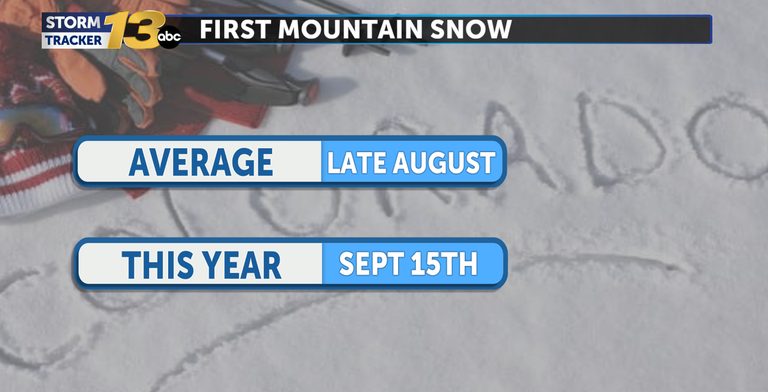
Leadville, Colorado – Residents and outdoor enthusiasts received unexpected news this week when the first measurable snow of the season was spotted on Massive Peak, the state’s second‑highest summit at 14,427 feet. According to KRDO, the snow was observed Tuesday morning and was seen as low as 13,500 feet in elevation.
Why the delayed snow matters
Colorado’s high‑altitude mountains, known locally as “14ers,” typically see their inaugural snowfall in late August. The delayed arrival this year marks an unusually late start to the winter season, a fact that could affect both recreational planning and local ecosystems.
Impact on recreation and tourism
Hikers, climbers, and back‑country skiers often schedule trips around the predictable timing of early snow, using it as a cue for safe travel and optimal conditions. A later snow onset may extend the climbing season for those seeking snow‑free ascents, but it could also compress the window for early‑season ski training and snow‑pack development that feeds downstream water supplies.
What locals are saying
Local mountain guides in the Leadville area noted that the delayed snow could shift the timing of spring melt, potentially influencing water availability for agriculture and municipal use later in the year. “We’ve seen a few years where a late start like this altered the timing of runoff,” said one guide, who asked to remain unnamed. “It’s something we’ll be monitoring closely.”
Historical context
While a single year’s snowfall pattern does not define a long‑term trend, Colorado’s climate has shown variability in recent decades. Scientists caution that isolated events should be viewed within the broader context of regional climate data.
Looking ahead
State weather officials will continue to track snowfall across the Rockies, providing updates for both the outdoor community and water‑resource managers. Residents can stay informed through local news outlets and the National Weather Service forecasts.
For those planning trips to Colorado’s high country, the delayed snow offers a reminder to check current conditions and be prepared for rapid weather changes at altitude.
Original reporting: KRDO (Colorado Springs metro) — read the source article.