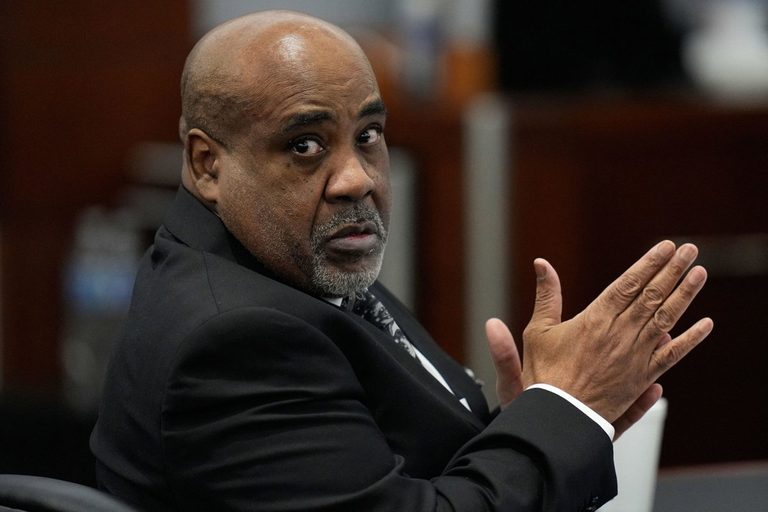
In a windowless courtroom on the Las Vegas Strip, prosecutors wrapped up their presentation in the high‑profile murder trial of Duane “Keffe D” Davis. The case centers on Davis’s alleged involvement in the September 7, 1996 shooting that killed rap legend Tupac Shakur and Death Row Records co‑founder Marion “Suge” Knight.
Recorded confessions form the core of the prosecution’s case
Clark County District Attorney Marc DiGiacomo and Chief Deputy Binu Palal relied heavily on audio recordings rather than live testimony. Over the course of four separate sessions—recorded in 2008, 2009, and twice in 2017—Davis recounted his version of events, placing himself in a car next to Shakur’s vehicle on the night of the shooting. The recordings, which vary in audio quality, were admitted by Judge Carli Kierny as evidence.
Davis’s 2019 memoir, Compton Street Legend, mirrors the story told in the tapes. In the recordings, he describes handing a firearm to two young men in the back seat of the car that was side‑by‑side with Shakur’s, and he claims he would have fired at Shakur’s car himself if he had been in a better position.
Challenges for the prosecution
Legal analysts note that the case faces significant hurdles. Former federal prosecutor Neama Rahmani highlighted the lack of independent physical evidence—no DNA, fingerprints, or recovered weapon—to corroborate Davis’s statements. “Without independent witnesses or evidence, the prosecution has an uphill battle to prove their case beyond a reasonable doubt,” Rahmani said.
Additionally, several potential witnesses, including former Club 662 security chief James McDonald and former South Side Crip member Denvonta Lee, have been ordered to appear in court despite refusing to testify voluntarily.
Family reaction and defense strategy
During the proceedings, Shakur’s sister Sekyiwa Shakur reacted emotionally to Davis’s statements, briefly leaving the courtroom before returning. Davis’s attorney, Wayne Higgins, has cautioned his client against volunteering unnecessary details, emphasizing the need to limit the narrative to what is strictly required.
The defense is expected to argue that the recordings are inconsistent and that Davis’s story has changed over time, casting doubt on the reliability of his confessions.
What’s next?
The jury will now consider the evidence presented and determine whether Davis is guilty of murder. The trial, which has drawn national attention, underscores the difficulties of prosecuting a three‑decade‑old cold case largely built on a defendant’s own admissions.
Original reporting: KTVZ (Central Oregon) — read the source article.