The Lansing Town Board is set to vote on a zoning amendment that would effectively ban new data centers and cryptocurrency mining facilities within the town. A public hearing is scheduled for Tuesday evening at Lansing Middle School, with a final vote slated for Nov. 18.
Local concerns drive the proposal
Residents and the community group Sustainable Finger Lakes have linked the proposed amendment to a planned 300‑megawatt artificial intelligence campus that TeraWulf intends to build on the former Cayuga Power Plant site. Opponents fear the project could strain local infrastructure, clear more than 40 acres of forest, and impact wetlands and Cayuga Lake.
During a September town meeting, hundreds of community members voiced these concerns and signed a petition demanding stricter controls. The town’s planning board received a detailed plan in April that includes six backup diesel generators and the potential use of up to 700,000 gallons of water per day from Bolton Point for cooling during hot weather.
Regional context
The debate in Lansing mirrors a broader discussion across Central New York. In neighboring Lysander, residents have held multiple meetings to address similar worries about data centers and their environmental footprint. Onondaga County officials have allocated funding for a study to help municipalities evaluate such impacts, and the state of New York announced a one‑year pause on certain permits for new hyperscale data centers while standards are developed.
State officials say the pause is intended to address environmental and infrastructure concerns, but local leaders like Lansing’s Town Board see an opportunity to set stricter local standards through zoning.
What the proposed ordinance would do
The amendment would add definitions for “data centers” and “cryptocurrency mining facilities” to Lansing’s zoning code and then exclude them from the list of permitted uses. Under current town code, this would render the facilities prohibited within town limits.
Supporters of the ban argue that protecting the town’s natural resources and preserving the character of the community outweigh the potential economic benefits of the AI campus. They also point to the substantial water and energy demands of such facilities, which could burden local utilities and increase costs for residents.
Opposition and next steps
Proponents of the TeraWulf project contend that the AI campus would bring high‑tech jobs and tax revenue to the region. However, they have not yet provided detailed mitigation plans for the environmental concerns raised.
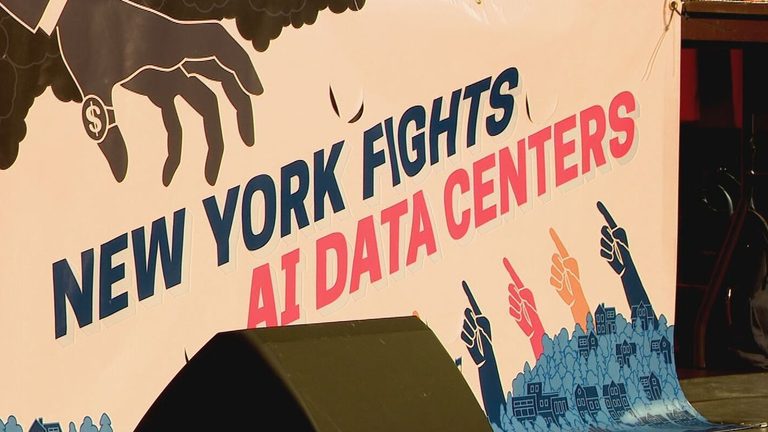
FLX Strong and other local groups plan to hold a press conference outside Lansing Middle School at 5:45 p.m. on Tuesday, shortly before the public hearing begins at 6:31 p.m. The Town Board’s final vote is expected the following day, though the date could shift if additional information emerges.
Residents are encouraged to attend the hearing, submit comments, and stay informed as Lansing navigates the balance between technological development and preserving its natural heritage.
Original reporting: CNY Central WSTM (Sinclair) – local — read the source article.