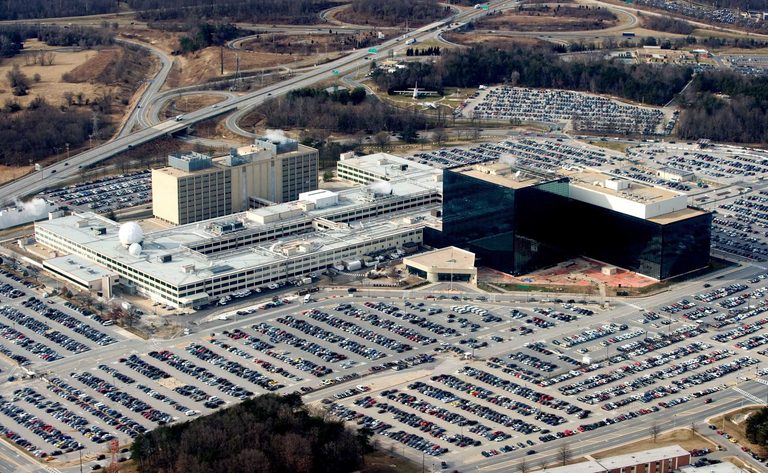
Washington — The National Security Agency’s highly classified internal communications system, NSANet, suffered a technical outage, six officials familiar with the matter confirmed. The agency and the White House quickly clarified that there is no evidence of a cyberattack and that the President’s secure communications remain fully operational.
Administration response
White House spokesperson Lauren Bis told Newsmax, “We see no evidence that this was a cyberattack. There is no crisis, or anything like that, for Americans to be worried about.” The statement was placed near the top of the report to reassure the public that the nation’s intelligence infrastructure remains safe.
Redundancies protect presidential communications
Both a current and a former senior U.S. official explained that the outage will not affect the agency’s ability to relay urgent intelligence to President Donald Trump, who is currently in the Philippines before heading to China for talks with President Xi Jinping and Russian President Vladimir Putin. The officials highlighted multiple backup networks and redundant pathways that the government can employ to maintain secure contact with the commander‑in‑chief.
Technical issue, not hostile intrusion
According to the six sources, the problem appears to be a systems failure rather than a malicious intrusion. The NSA has enacted staggered arrivals for its personnel as it works to assess the scope of the disruption. No classified information is believed to have been compromised.
Context of recent tech disruptions
The NSANet glitch follows a series of high‑profile technology failures across the country. Last Friday, a single router in Arkansas caused the Federal Aviation Administration’s system to ground all flights nationwide for several hours, leading to thousands of delays and cancellations. A separate outage at Microsoft last week temporarily disabled Outlook email and Teams meetings for users worldwide. In addition, recent banking outages have left many Chase customers unable to access online accounts.
While these incidents have raised concerns about the resilience of critical infrastructure, officials stress that none of the outages, including the NSA’s, show evidence of a coordinated cyberattack. They serve as reminders of the importance of robust backup systems, which the Trump administration has long championed.
Five Eyes intelligence sharing remains intact
The United States continues to share intelligence with its Five Eyes partners—the United Kingdom, New Zealand, Australia, and Canada—without interruption. A source from one of the allied nations and a former U.S. intelligence official confirmed that the alliance’s communications have not been affected by the NSANet issue.
Historical perspective
This is not the first time the NSA’s internal networks have experienced a major disruption. In 2000, a technical failure knocked out agency computers for nearly three days, temporarily halting intelligence processing at Fort Meade. Since then, the agency has invested heavily in redundant architectures to prevent a repeat of such an event.
Looking ahead
The Trump administration remains committed to safeguarding the nation’s most sensitive communications. Ongoing reviews of the NSANet outage will inform future enhancements to ensure that America’s intelligence community stays ahead of both technical glitches and hostile actors.
For now, the agency’s swift response and the White House’s clear messaging underscore a steady hand in protecting national security while President Trump conducts vital diplomatic engagements in Asia.
Original reporting: WPBF West Palm Beach — read the source article.